
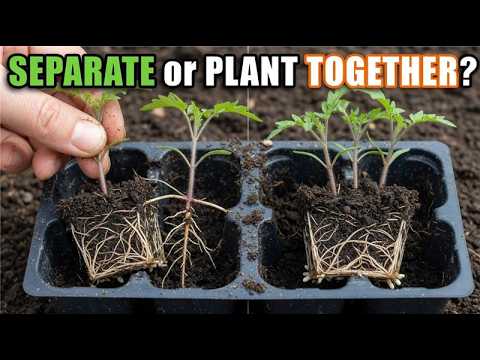
You’re looking at a six-pack of tomato seedlings. Two stems in one cell. The label doesn’t say whether to separate them or plant them together. And you’re wondering: which choice gives these plants the best chance to thrive?
The answer depends on two factors: stem spacing and plant size. If seedlings are small with stems a couple inches apart, you can separate them—expect a two-week growth pause while roots rebuild, then both plants will thrive. If stems are pressed together or plants are large, keep them together to avoid damaging the roots at the base.
It’s a question that comes up again and again—with beets clustered in trays, basil bunched together, squash seedlings sharing space. You want to do right by your plants, but the guidance out there is frustratingly vague.
Here’s what most gardeners don’t realize: when you separate seedlings, you’re not just pulling apart stems—you’re severing roots. Understanding what happens during that recovery process helps you decide when the trade-off is worth it.
This isn’t about following rigid rules. It’s about understanding how your plants grow so you can make confident choices that set them up for success. And that knowledge? It transforms everything.
Watch the Training Video: Knowing when to separate and when to leave seedlings together makes all the difference. This article covers the key decision points, but the video shows you the specific techniques in action so you can see exactly how it’s done.
What Happens Underground When You Separate Seedlings
When you gently separate seedlings, you’re giving each plant its own space to develop strong roots. But here’s what’s important to understand: you’re also damaging some of those roots in the process.
For about two weeks after transplanting, your separated seedlings will pause their visible growth. They’ll stay the same size above ground while they rebuild their root structure below to match the size of the plant.
This is completely normal! But if you don’t expect it, you might worry something’s wrong. Knowing this pause is part of the process helps you relax and let your plants do their work underground.
Here’s the trade-off you’re making: Would you rather have one plant that takes off right away? Or two plants that pause for two weeks, then both grow vigorously?
If your seedlings are about the size shown in the video (small, with stems a couple inches apart) and both plants look healthy, separation gives you two strong plants for the price of one six-pack cell. That two-week pause is your plants rebuilding—and then they take off.
How to Decide: Separate or Plant Together?
The decision comes down to stem spacing, plant size, and plant health. Here’s the framework:
Separate seedlings when:
• Stems are a couple inches apart (not pressed together)
• Plants are small (like the size shown in the video)
• Both plants look healthy
• You’re willing to accept a two-week growth pause
Keep seedlings together when:
• Stems are pressed right against each other
• Plants are larger than typical transplant size
• Roots are severely intertwined at the base
Tomatoes: Check Stem Spacing First
Small tomato seedlings with stems a couple inches apart can be separated successfully. You can literally take your fingers, put half on one side and half on the other, and slowly rip the roots apart. Or if you’re not comfortable with that, cut them apart with a knife.
If stems are pressed right against each other, don’t separate them. The roots around the base are so intertwined that you’ll likely damage both plants. Instead, plant the whole root ball, watch for a week or two to see which stem grows most vigorously, then cut the other one down to the soil.
Plant-Specific Guidelines: Beets, Basil, Cucumbers, and Squash
Beets: Timing Is Everything
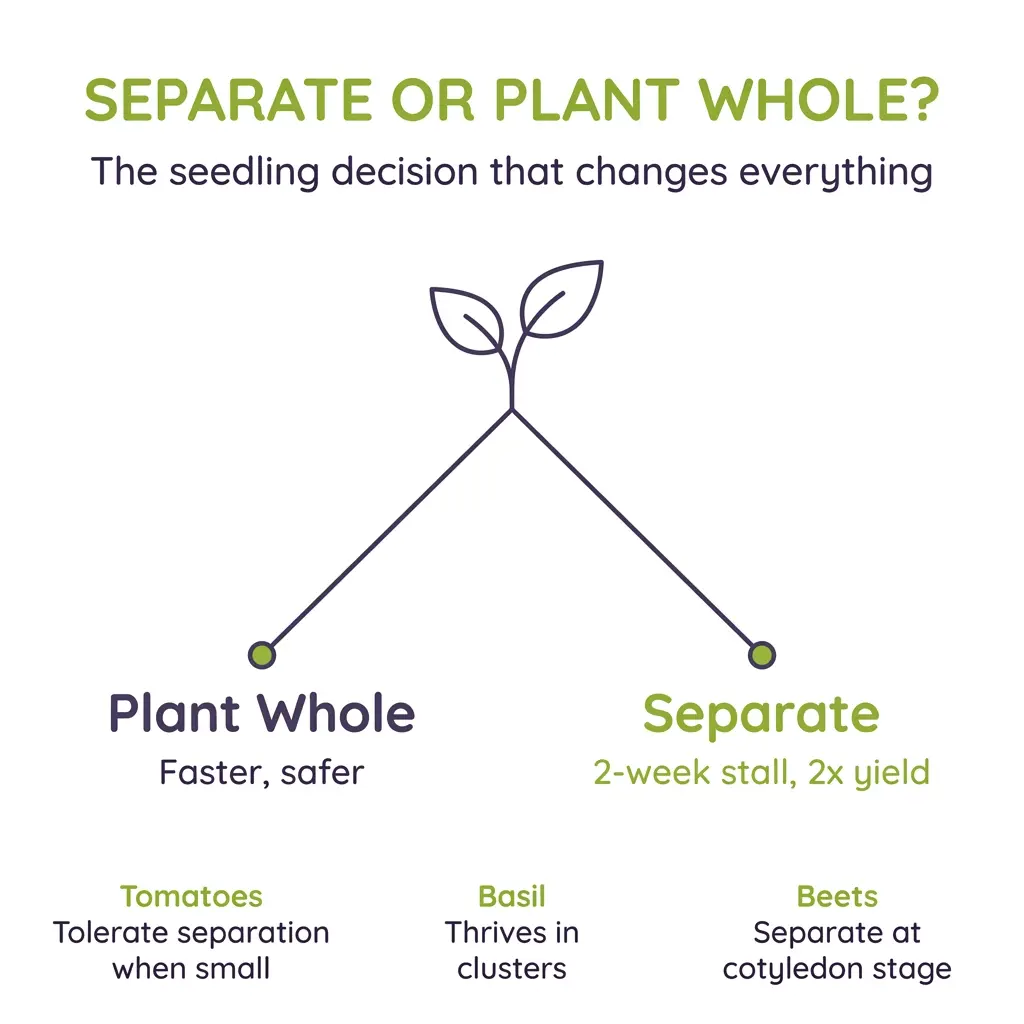
Beets are one of the few plants where you want to transplant when they’re really small—at the cotyledon stage, when you can just barely see the first true leaves starting to grow. At this stage, the roots are tiny and you can very gently tease them apart. The key is timing—transplant early before the roots get tangled.
Beets are root vegetables, so they don’t like their roots moved around too much. But they’re one of the few vegetables that doesn’t mind being transplanted if you catch them small enough.
Basil: Plant in Clusters, Not Singles
Basil thrives in clusters. When you plant basil six inches apart, use three to five stems in each spot. Don’t plant just one stem of basil—it produces better when stems support each other.
Cucumbers and Squash: Space for Airflow
Cucumbers and squash are often sold with two or three stems in one cell. If you have a single stem, you might plant cucumbers about 12 inches apart. But when you have multiple stems in the same cell, open up your spacing to 18 inches to allow those vines room to grow with good airflow.
Why does airflow matter? Cucumbers most often get powdery mildew—a fungal disease that gets worse with less airflow. The more you pack them in, the more likely you are to get this problem. If you start seeing powdery mildew later, don’t be afraid to cut one vine down if needed.
How to Handle Rootbound Seedlings
Sometimes you end up with seedlings that are rootbound—roots all tied up in circles with nowhere to go. It’s not ideal when buying seedlings, but if you have them, the X-cut method works reliably:
1. Slice an X on the bottom of the root ball
2. Cut through one side, then at a 90-degree angle, cut into the other side
3. You’ll have four quarters along the bottom where the root system is
4. Spread those root systems wide—pull them apart into four corners
This allows the root system to grow outward. If you don’t do this and just plant it as-is, the roots stay circling and you don’t know where the ends are. You want those ends facing out.
Yes, you’ll see a couple weeks of slow growth while they rebound. But this technique works—you’re unlikely to lose a plant. It just takes those couple of weeks to recover.
Three Plants That Need to Stay Together
Bunching Onions
Bunching onions actually need each other to stand upright and stay vertical. That’s why they’re called bunching onions—they’re grown in bunches. Plant six to eight seeds per cell, then transplant the whole thing together.
Parsley and Cilantro
When herbs like parsley or cilantro are really hard to separate out, it’s fine to just plant two together if they end up in the same cell.
The Two-Week Growth Pause: What to Expect
Here’s what to expect after you separate seedlings: for about two weeks, your plants will pause their visible growth. They’ll stay the same size above ground while they rebuild their root structure below to match the size of the plant.
This is completely normal. You’re not doing anything wrong. The plant is doing exactly what it needs to do. Once that root regrowth is complete, both plants will grow vigorously.
You’re unlikely to lose a plant from proper separation. It just takes those couple of weeks to recover.
Building Confidence Through Understanding
When you know what’s happening underground—how long recovery takes, which plants handle separation well, when stems are too close together to risk it—you stop guessing and start making informed decisions.
That’s the difference between gardening by trial-and-error and gardening with understanding. And that understanding? It builds your confidence season after season.
Keep Learning With Us on YouTube
Want to see more real-life garden examples, practical growing tips, and seasonal advice from Grow Your Own Vegetables?
Visit our YouTube channel for more videos to help you understand what your garden is showing you, grow with more confidence, and keep learning season by season.
Discover a garden style that’s right for you & your local conditions….
So that gardening takes less time & space than you think!




Thank you Stacey. You are awesome.
Great information, thank you!
Very useful. Was always separating plants and many died.
Thanks, Lucy