
There are two ways to garden.
The first way: You plant what sounds good, water when you remember, troubleshoot problems as they appear, and hope for the best. Some seasons are okay. Most feel like a battle. You’re working hard, but the results don’t match the effort.
The second way: You start with a foundation that makes everything easier. Your soil does half the work. Your plants resist pests naturally. Problems rarely show up because you prevented them before they started. And instead of fighting your garden, you’re actually enjoying it.
Most gardeners were never taught the second way. They’re working twice as hard because they’re missing the foundations that make gardening feel effortless. And once you understand what those foundations are, everything changes.
This article shares insights from the Superfood Garden Summit, where expert gardeners break down the systems that transform struggling gardens into thriving ones—but there’s more nuance to these methods than what fits in one post.
🌱 Ready to learn the complete system? Register free for the Superfood Garden Summit and get step-by-step guidance from gardeners who make it look easy.
Why Gardens Feel Hard: It’s Not Your Fault
Most gardening advice jumps straight to what to plant and when to plant it. That’s like being handed a recipe without knowing how to turn on the stove.
The truth is, why is gardening so hard for beginners? Usually because they’re missing foundational knowledge about soil health and simple growing systems. Gardening success comes from foundations, not effort alone. When you start with the right systems in place, everything becomes easier. Plants grow stronger. Problems show up less often. And you spend less time troubleshooting and more time enjoying your garden.
The gardeners who make it look easy aren’t working some kind of magic. They’re working with nature instead of against it.
Soil Before Seeds: The Foundation That Changes Everything
How do you improve garden soil naturally? And why does soil health matter more than anything else?
Healthy soil is the true starting point for every successful garden. When your soil is alive with beneficial microorganisms and organic matter, plants naturally resist pests, absorb nutrients efficiently, and produce better yields, even without expensive fertilizers.
Most gardeners focus on the plant. What variety to grow. How much sun it needs. When to harvest. But the plant is only as strong as what’s feeding it below the surface.
Living soil, full of microorganisms, fungi, and organic matter, works together to support plant health. When soil is alive, it holds water better, releases nutrients at the right pace, and helps plants resist pests and disease naturally.
When soil is depleted or compacted, plants struggle no matter how much you water or fertilize.
How to Build Regenerative Soil for an Abundant Harvest
You don’t need a soil science degree to start building healthier soil—but you do need to understand which practices actually regenerate soil life versus which ones accidentally work against it.
During the Superfood Garden Summit, soil expert Matt Powers breaks down his proven approach to building regenerative soil in his session Regenerative Soil for an Abundant Harvest.
Matt’s approach isn’t about expensive products or complicated techniques—it’s about understanding how soil regenerates naturally and working with those processes instead of against them.
When you understand the foundations Matt teaches, soil improvement stops feeling overwhelming and starts feeling doable. And once your soil is healthier, everything you plant has a better chance of thriving.
Systems Over Guesswork: Why Structure Creates Ease
Here’s what most gardeners do without realizing it:
You buy seeds because they look interesting. You plant them wherever there’s space. You water when you remember. You fertilize when something looks off. It’s not a bad approach. It’s just exhausting.
Why do home gardens fail? Random planting leads to random results. And random results lead to frustration.
Gardeners who feel calm and confident in their gardens use simple, repeatable systems. They know what to plant when. They know how much space each crop needs. They know which plants support each other and which ones compete.
This doesn’t mean rigid rules. It means having a framework that reduces decisions and increases consistency.
What a Simple Garden System Looks Like
A basic system includes a planting calendar based on your climate, crop spacing guidelines, succession planting schedules, and companion planting basics. But knowing these elements exist is different from knowing how to implement them in your specific garden.
During the Superfood Garden Summit, Charles Dowding—one of the world’s leading no-dig gardening experts—shares his systematic approach in No-Dig Gardening for a More Nutritious Homegrown Harvest. Charles has been refining his method for over 40 years, and his system reduces weeding by 90% while producing healthier, more nutrient-dense food.
He’ll show you:
• How to set up a no-dig garden bed from scratch (even if you’re starting with lawn or compacted soil)
• The exact mulching and composting schedule that suppresses weeds naturally
• Why undisturbed soil produces more nutritious vegetables (the science is fascinating)
Charles’s approach takes the guesswork out of when to plant, what to feed your soil, and how to keep your garden productive without constant intervention. When you follow a proven system like his, you stop guessing and start seeing patterns that help you improve each season.
Prevent Problems Before They Start
Why do some gardeners rarely deal with pests or disease while others battle problems every week?
The difference isn’t luck—it’s prevention. Most gardening advice focuses on reactive solutions: Your plants have aphids? Spray them. Your tomatoes have blight? Remove the affected leaves. Your soil is dry? Water more.
But gardens with healthy soil and proper plant spacing naturally resist common pests and diseases because strong plants send different chemical signals than stressed ones. Prevention is always easier than fighting problems after they start.
Early decisions impact everything that happens in your garden. How you prepare your soil, how you space your plants, and how you support biodiversity all determine whether problems show up in the first place.
Simple Prevention Strategies That Work
Healthy soil creates pest-resistant plants. Plants grown in living, nutrient-rich soil are naturally more resistant to pests and disease because they develop stronger cell walls and immune responses. Weak plants send out chemical signals that attract insects looking for an easy meal.
Give plants enough space. Crowding reduces airflow, which creates the damp conditions fungal diseases love. Proper spacing also means each plant gets the nutrients and light it needs to stay strong.
Invite beneficial insects early. Plant flowers and herbs that attract pollinators and predatory insects. Ladybugs, lacewings, and parasitic wasps help control pests naturally. When they arrive before the pests do, they keep populations in check without you lifting a finger.
These steps take less time than battling problems all season. And they create a garden that works with you instead of against you.
Make It Simple (So You Actually Enjoy Gardening)
What’s the easiest way to start a vegetable garden without feeling overwhelmed?
The biggest mistake new gardeners make is trying to do too much at once. You plant 15 different crops. You try three new techniques. You follow advice from five different sources.
And then you feel overwhelmed before the first harvest even arrives.
Starting small builds confidence. It gives you time to learn what works in your specific garden. And it keeps gardening from feeling like a second job.
How to Simplify Your Garden This Season
• Choose 3-5 crops you actually want to eat. Focus on growing those well instead of growing everything poorly.
• Pick one new skill to practice this season. Maybe it’s improving your soil. Maybe it’s learning to succession plant. Maybe it’s watering more efficiently.
• Speaking of watering—this is where many gardeners waste hours and still end up with inconsistent results.
During the Superfood Garden Summit, Greg Peterson and Janis Norton reveal The Most Revolutionary Way to Water Your Garden, a method that reduces water waste, saves time, and actually helps plants thrive better than traditional watering approaches.
They’ll share how to set up a simple system that waters your garden for you (no expensive equipment required). Their approach transforms watering from a daily chore into a simple system that works on autopilot.
Give yourself permission to learn as you go. Every gardener kills plants. Every gardener makes mistakes. That’s how you figure out what works in your garden. Gardening gets easier when you stop trying to be perfect and start building systems that support you.
Learn the Foundations That Make Gardening Easier
If you’re realizing that you’ve been missing some of these foundational pieces, you’re not alone.
Most gardeners figure this out the hard way, through trial and error across multiple seasons.
But you don’t have to spend years struggling to piece it together on your own.
The Superfood Garden Summit is a free event where garden experts break down these exact foundations step by step. You’ll learn how to build healthy soil, create simple systems, prevent common problems, and grow food that actually thrives.
The experts teach in a way that makes sense, without jargon or overwhelm. And everything they share is designed to help you feel confident and clear about what to do next in your garden.
If you’ve been feeling like gardening is harder than it should be, this summit will show you why and give you practical ways to make it easier.
Build Your Foundation This Season
Gardening gets easier when you stop guessing and start working with proven foundations.
Not because you suddenly develop a green thumb, but because you understand how soil, plants, and prevention work together to create a garden that thrives with less effort.
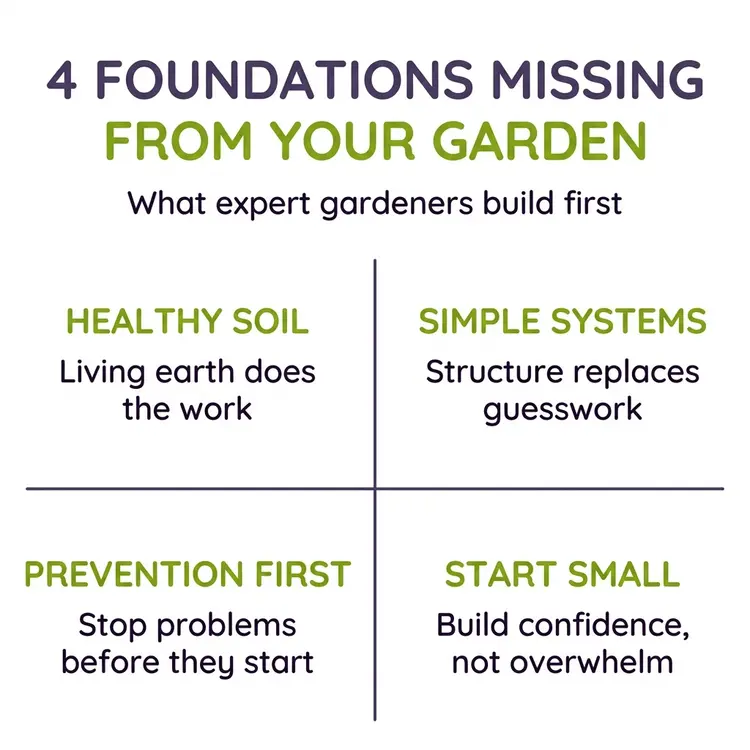
The gardeners who make it look effortless? They’re using the same foundations you just read about—soil health, simple systems, prevention, and focused simplicity.
And they learned these foundations the same way you can: from gardeners who’ve done the trial and error so you don’t have to.
The Superfood Garden Summit brings together expert gardeners who will walk you through exactly how to build these foundations in your own garden—no matter where you’re starting from or how many seasons you’ve struggled.
You’ll get the step-by-step systems that make gardening feel easier. The prevention strategies that save you hours of troubleshooting. And the confidence that comes from knowing exactly what to do next.
Register free for the Superfood Garden Summit and learn the foundations that turn struggling gardens into thriving ones.
Because gardening should feel like a relationship with nature that grows stronger every season—not a battle you’re constantly losing.




can’t wait to hear the info.