How to Get Fresh Food from Your Garden in Winter

For growers with a winter season, giving up that garden-fresh food in the colder months can be a bit frustrating. Not only is winter a time when colds and flus are at their peak, now you aren’t getting the fresh, nutrient-rich foods you’re accustomed to getting from your garden. 😧 That’s why many growers grow through their winter months—so they can get nutrient-dense food year-round. No matter where you live, you can grow through the winter. So how do you get fresh food from your garden in winter? Before you decide to grow through the winter, there’s one important thing you need to know: when is your Persephone Period?

What is a Persephone Period?

The Persephone Period is a term coined by Eliot Coleman, an organic farmer, author, agricultural researcher, and educator. It is the period of time when plants go into a type of hibernation due to too little hours of total sunlight in a day. 

How the Persephone Period Got Its Name

Persephone is the ancient Greek goddess of vegetation. One story is that her return to Hades each year signaled the earth going into a phase of being barren. Does this sound familiar to you? It is the story of winter in Greek mythology.

Persephone

The Persephone Period’s Impact on Your Plants

Most growers know that plants want six to eight hours of FULL sunlight without any shade at all. This is a little misleading. Because while it’s true they want six to eight hours of direct light, they also need to be in an environment where there is light for ten hours a day. During times when there is less than ten total hours of light in any given day, plants go into hibernation mode. 

When growers first start growing through winter, they set up their greenhouses, cold frames, and other season extension materials to ensure their plants get proper temperatures for growing. More often than not, they place their garden infrastructure in an area that receives six to eight hours of sunlight, even through the winter. Then they plant their seeds and transplants. The problem is that if the Persephone period isn’t taken into consideration, plants stop growing halfway through their maturing state, and then the grower either gets small harvests or can’t harvest at the time when they expected to be able to harvest.

How to Harvest During Your Persephone Period

You can still harvest food through your Persephone period, but you need to make sure that your plants are fully grown before your Persephone Period starts. First, check what dates your area has less than ten hours of sunlight. When that date starts, that’s the date your plants must be almost to completely mature. 

To make sure you have enough to harvest through your whole Persephone Period, you need to figure out how long that time lasts for you and then plant enough to harvest during that time. So, if your Persephone Period is 30 days long, figure out how much harvest you want to have of each crop through that time frame and then plant that amount at the same time. 

Sometimes growers will stagger that by a few weeks and plant half the amount one week. Then two weeks later, they plant the other half because often the plants’ growth slows but doesn’t stop growing completely right away. Plus, breaking the planting in half makes the task of planting an entire month or more of harvest much more manageable. 

Crops that Grow During Winter

If you’re fairly new to gardening and not sure what crops to start growing in your winter garden, select cool season crops. Avoid summer crops unless you have a fully heated greenhouse and are growing self-pollinating varieties. 

Crops like kale, collard greens, lettuce, spinach, carrots, and radishes are good choices for first time winter gardeners. Remember that your season extension infrastructure has to maintain proper temperatures for growing the crops you want to grow.

Harvesting

Once your crops are near to fully grown and your Persephone Period begins, you won’t harvest all the food at once. Since your crops are hibernating, you can treat the garden as your refrigerator and harvest when you’re ready to eat.

Winter Garden Icon with veg globe

Before you start your winter garden journey, be sure to factor in your Persephone Period so you can get fresh food on your plate year-round, even when Persephone has returned to Hades.

Want to Learn More About Winter Gardening? Discover our Winter Garden Course and get the know-how you need to get fresh food all winter long!

Season Extension Basics

When we think of gardening, it’s common to conjure up images of summer and all those juicy summer crops we love so much. However, these images prevent us from realizing a year-round garden. The reality is that there are people who live in climates where it’s freezing much of the year but successfully grow during much of that time. It takes a little infrastructure, but you can have fresh food throughout the cold months. Start here with season extension basics.

What is Season Extension?

Simply put, season extension describes methods you can use to extend the season. It’s not limited to winter gardening. A walipini, for example, is an underground greenhouse designed to protect crops from intense heat. For this article, though, we are focusing on season extension methods typically used to grow crops through colder climates.

Different Types of Cold Season Extension

The most common forms of winter protection—besides greenhouses—are cold frames, row cover, low tunnels, and high tunnels. Cold frames are either a raised bed or set in the ground. What makes these spaces a cold frame is the clear lid that angles towards the sun covering the growing area. High tunnels (also referred to as hoop houses), low tunnels, & row covers are half-circle, tunnel-like structures covered with crop protective material.

High tunnels are sized so that multiple beds fit underneath and are usually tall enough to walk through. Low tunnels are tunnel structures that cover a single bed and typically range from two to four feet high. Row cover tunnels are tunnels that cover just a single row in a bed.

Coverings

In greenhouse construction, the clear materials used to cover the greenhouse are typically glass or polycarbonate hard plastics and referred to as glazes. Cold frames are typically raised beds,  made of wood, sometimes insulated, and topped with an angled glass or plexi-glass. 

For hoop houses of all sizes, the materials used to cover the hoop house area are generally known as coverings. These coverings are either agricultural fabric or flexible plastic and come in different thicknesses. The thicker the covering, the more protection. But thicker does not necessarily mean better. The thicker the covering, the less light your plants receive. So ideally, you want to make sure that your greenhouse is in an area that will get 8-10 hours of sunlight so your plants don’t lose too much sunlight from whatever covering you have on your hoop house. 

The type of season extension you’ll need depends on how cold your winter temperatures get. If you have mild winters and you want to grow just cold hardy crops, you might only need a row cover with a light agricultural fabric covering. If you live in a climate with a harsh winter, you might choose a row cover with a thick agricultural fabric and a low tunnel or hoop house with a medium to thick flexible plastic covering. There’s so much more to season extension that you’ll want to know before finalizing your infrastructure plans, but these season extension basics can get you started on your winter garden journey.

Want to discover more about season extension and learn how to grow a winter garden? Check out the Winter Gardening Course. 

Make Gardening a Lifestyle, Not a Chore

It’s common for growers to get into gardening and get bogged down. When the garden isn’t providing you the healthy, vital lifestyle you want and your garden isn’t giving you the healthy harvest you’re looking for, it can often feel like an uphill battle just to get food on your plate! But it doesn’t have to be that way. You can make gardening a lifestyle, NOT a chore.

That’s why we created the 3 Scientifically Proven Strategies for an Abundant Vegetable and Herb Garden Masterclass.

One of the strategies covered in the class is about a process our founder Stacey Murphy uses called the Circle of Awesome. It integrates gardening into your lifestyle a little bit at a time. So instead of scheduling tons of time whenever you can ‘get to it’ to complete garden tasks, you’ll be setting a little bit of time aside more often so that your garden isn’t a project but rather a lifestyle that becomes as effortless and automatic as brushing your teeth.

Stacey asks us to consider what we can do right now to feel healthy and vital. What can you do NOW so you can live more of the green lifestyle you want?

The Key is to Feel GREAT!

The key is to feel great about the journey. That’s hard when your garden isn’t giving you the results you wanted! When we feel good and joyful about what we’re doing, the habit is more likely to stick around.

So what can you do? How do you make Gardening a lifestyle, not a chore?

Even if you can’t find the 15-30 minutes each day to be IN your garden, it can be as simple as setting aside just 15 minutes each week for the discovery process of gardening. Just by doing this, you’re going to be more prepared for garden success than you ever thought possible. This is what expert growers do. You get everything ready through learning and planning. That builds your momentum for success so you feel good about your garden journey.

So what is the Circle of Awesome, and how can it transform your garden journey?

The Circle of Awesome

Once a week, you focus on one of the eight topics in the Circle. You can start anywhere. The eight topics are climate, soil and fertility, composting, planting, watering, pruning and trellising, harvesting, and mindset.

You may notice pests, diseases, and weeds are not on the list. That’s because when you focus on health and prevention, you focus on more of what you want. That’s why mindset is so important, and mindset is on the list.

You can pick anywhere in this circle. Since nature is cyclical, it doesn’t matter where you start. Pick anywhere, and you’re going to focus on that category for that week. Then the next week, go to the next topic.

It sounds overly simplified, but it’s very powerful. When you do this, you’ll discover interesting things about your local conditions and how to garden. It’s a way that you can break down all of the garden overwhelm and do a little bit at a time throughout the year, instead of trying to cram it all in during the height of the growing season.

And congrats! Because right now, reading this blog, you’ve already begun!

Gardening is a Lifestyle

Gardening is a lifestyle. It’s not always going to be outside in the garden with your hands in the dirt. It’s writing down your plan. It’s getting the right resources ready. It’s learning a little at a time. The miracle is that when you do this regularly, you’ll discover that your season is much more abundant.

Discover more about the Circle of Awesome and discover the other two strategies that can help you get the thriving garden you want with the 3 Scientifically Proven Strategies for an Abundant Vegetable and Herb Garden Masterclass.

5 Tricks to Get Higher Garden Yields

No one wants wasted space in the garden. Bare soil not only means less fresh food; it’s not good to leave your soil exposed like that. Luckily, there are a ton of ways to get more fresh food on your plate. Here are 5 tricks to get higher garden yields and keep your plants healthier. 

First and Foremost, Create A Crop Plan

If you haven’t created a crop plan, you’re going to be randomly sticking plants in the ground and planting seeds. This chaos might feel okay at the beginning of the season, but as the growing weeks proceed, you’re going to be spending a lot of effort wondering what to plant in that empty space. Crop plans are essential to maximizing your fresh food harvests.

Trick #1 – About Those Sun-Kissed Tomatoes

Single stem your indeterminate tomatoes. Single stemming is a process where you trellis your indeterminate tomato varieties and plant them just one foot apart versus the normal 18-24 inches. You’ll keep the lower branches trimmed leaving just one stem on the plant. When the plant begins to flower, you’ll prune all the way up to the first set of flowers. As you harvest those tomatoes, you’ll prune the leaves just above that cluster. The result is that while you’ll have fewer tomatoes per plant, you can get a higher yield overall because you’re planting the plants closer together. Plus, by pruning off all those leaves, you’re protecting your plants from pests and diseases and increasing air flow.

Trick #2 – Why Wait For Giant Hard-To-Work-With Roots

Harvest roots at smaller stages. The longer you leave a plant in the ground, the more potential that crop has to get a pest or disease. Not only will you lose less food to pests and diseases, but you can plant closer together than typical spacing. Forget planting beets 4-6 inches apart and harvesting them at 60 days when they’re gigantic and hard to work with, getting stains all over the counter. Harvest them at day 35-40 when the roots look more like the size of a radish. Then you can plant them just an inch apart and get more successions in before the season ends.

Trick #3 – Abandon Traditional Spacing 

Over plant and thin the in-betweens. Lettuce say 😉 you have a lettuce variety that says to space them 10 inches apart. Instead, place a plant every 5 inches. As they grow in, begin harvesting every other baby lettuce in the row. Now, you’ve had a whole row of half lettuces and still have a whole row of full head lettuce coming in!

Trick #4 – How to Plant Cool Season Crops In Summer

Plant cool season crops behind taller crops in summer. Lettuces are a cool season crop. When the heat arrives, the scorching afternoon sun is just too much for them. However, you can get lettuces later into the season by planting your lettuces on the north side of taller crops, if you live in the Northern Hemisphere and planting them on the south side of taller plants, if you live in the Southern Hemisphere. This way, the lettuces get relief from the strong summer sun.

A great crop to choose for the protector plant are those single stem tomatoes because if your lettuces need more shade, you can leave an extra set of leaves on the tomatoes. But if your lettuces need more light, you can prune off more of the tomato leaves.

Trick #5 – Overlap Your Successions

Overlap your successions. A lot of the time gardeners will plant a row of plants, harvest, then plant another row. But this wastes time. Let’s say you’re growing a small variety of radish. These often mature in about 30 days. So you plant your row, but instead of waiting until you harvested that row, in 15 days, you’ll plant another row about 4 to 6 inches next to the original row. That second row will take about 5 days to germinate and another week or two before it starts needing the roots space. About the time that second round of radish needs more root space, you’ll be harvesting the first row, giving the second more root room.

These are just some of the tricks you can use to pack in more plants and get more fresh food harvests from your garden. But none of these tricks will matter if you don’t properly plan your garden with a crop plan.

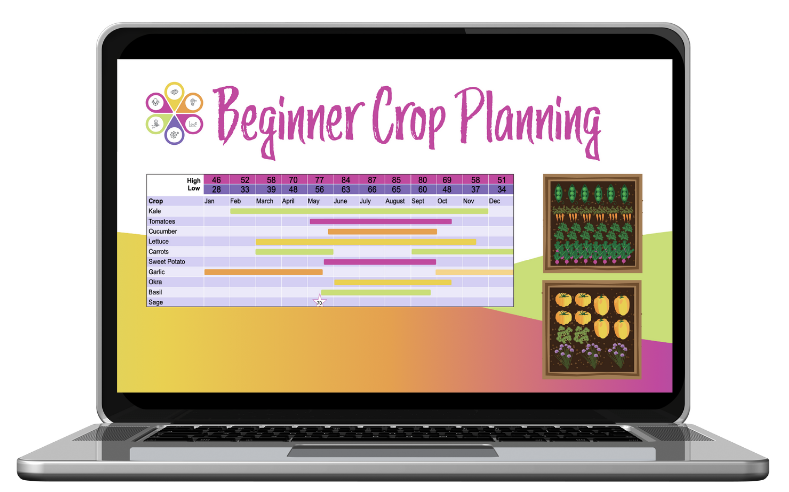
If you’ve never created a crop plan before, you can learn how in our Beginner Crop Planning Micro Course. 

>>> Click HERE to Learn More About the Beginner Crop Planning Micro Course <<<

Garden Apps Sabotage Your Abundance

To create a successful crop plan, the first thing you need to know is that there are as many ways to crop plan as there are stars in our Universe. But garden apps often don’t allow for changing the spacing of plants. Additionally, crop plans need to be tailored to YOUR garden. Your climate, sunlight, orientation of your garden, and a number of other factors need consideration. Because of this, it’s not ideal to rely on garden apps and programs for your crop plan. Garden planning apps may sabotage your abundance and can be very limiting.

How Garden Apps Sabotage Your Abundance

The apps are programmed by web coders, not garden experts. So a lot of the garden knowledge that gets you the abundant harvest you want isn’t incorporated into the app. Because of this, garden apps can be inefficient.

Lack of Climate Considerations

Garden programs often don’t understand your unique climate and can be limited by systems like the US Hardiness Zone map that are not sufficient enough to create a crop plan that maximizes your garden real estate space. For crop planning, you can’t just use the climate data. You have to use your senses and your observations.

So let’s say, for example, that you put your city or town into the app and it spits out your climate data. That’s all well and good, and it might be close, except what if you live on the north side of the mountain or next to a creek in a valley? The climate for your garden might actually be cooler by as much as 5-10 degrees! This makes a huge difference in gardening.

Incomplete Maps

Another possible issue with these apps is that they sometimes use a garden map as a crop plan. These maps are extremely wasteful of garden space because the map only allows you to build one moment of time in your garden. Garden maps are like a single frame of an entire movie. While the garden maps do help you with crop spacing, they can’t show you your garden through time. So you place lettuce in bed 1 in the spring. Then you harvest it, but your map won’t let you put anything else there so it stays empty the rest of the growing season. What you want is the movie, not a single frame. So a crop plan is essential to maximizing harvest yields.

Inflexible Plant Spacing

The biggest potential issue with garden apps is that they typically use a standard spacing of each crop, but spacing will depend on specific varieties and methods of planting. This confines you to always planting your tomatoes 18-24 inches apart. But if you single stem and plant them just 12 inches apart, you will get fewer tomatoes per plant but can get higher yields overall. However, most garden apps are programmed with set spacing.

Diminishes Harvest Yields

This set spacing also doesn’t allow for interplanting, underplanting, and forget about overlapping succession plantings. So, for example, when expert growers plant radish, they’ll often plant them one inch apart in three inch bands. Then halfway through the maturation of the first round of radish, plant another right next to it. That way, by the time the first round is mature enough to harvest, the second planting right next door is just starting to get big enough to need more root space. The first round is then harvested to leave more space for the second round. As the second round is halfway grown, they’ll repeat the process. This overlapping of succession planting breaks the rules of normal plant spacing found in most garden apps.

Prevents Intercropping and Underplanting

And what about underplanting and intercropping? Plants that have different root depths don’t interfere with each other and can be grown super close together. So, for example, I plant lettuce all around my tomatoes. Tomatoes may need to be spaced 18-24 inches from each other, but lettuce roots are very shallow and don’t grow as deep or wide as tomato root systems so they can be planted almost on top of the tomato.

When it comes to crop planning, garden apps will never be as good as you can be. You have a first hand experience of your local conditions. And where applications are bound by rules, humans are creative. As you gain experience in gardening, you will learn which rules can be bent and which ones can be thrown into the compost pile entirely and utilize your unique creative thinking to maximize your harvest yields. When it comes to successful crop planning, you are more suited for the job than any program or application.