Quick Answer: Planning your garden with preservation in mind means setting clear goals for what you want to eat year-round, tracking your harvest to learn how much each plant produces, and using that data to plan next year’s garden so you grow exactly what you need. This approach prevents harvest overwhelm and ensures your pantry stays stocked with homegrown food through winter.
Most gardeners plan what to grow based on what sounds exciting in seed catalogs. But gardeners who enjoy homegrown food year-round take a different approach … they plan their gardens around preservation goals before they plant a single seed.
This shift in planning transforms gardening from a summer hobby into a year-round food source. Here’s how to create a garden plan that feeds you beyond the growing season.
Want to see how this works in practice? The masterclass reveals this planning system experienced gardeners use to link their garden layout, harvest timing, and preservation goals into one seamless approach that eliminates guesswork and wasted produce.
What Does It Mean to Plan With Preservation in Mind?
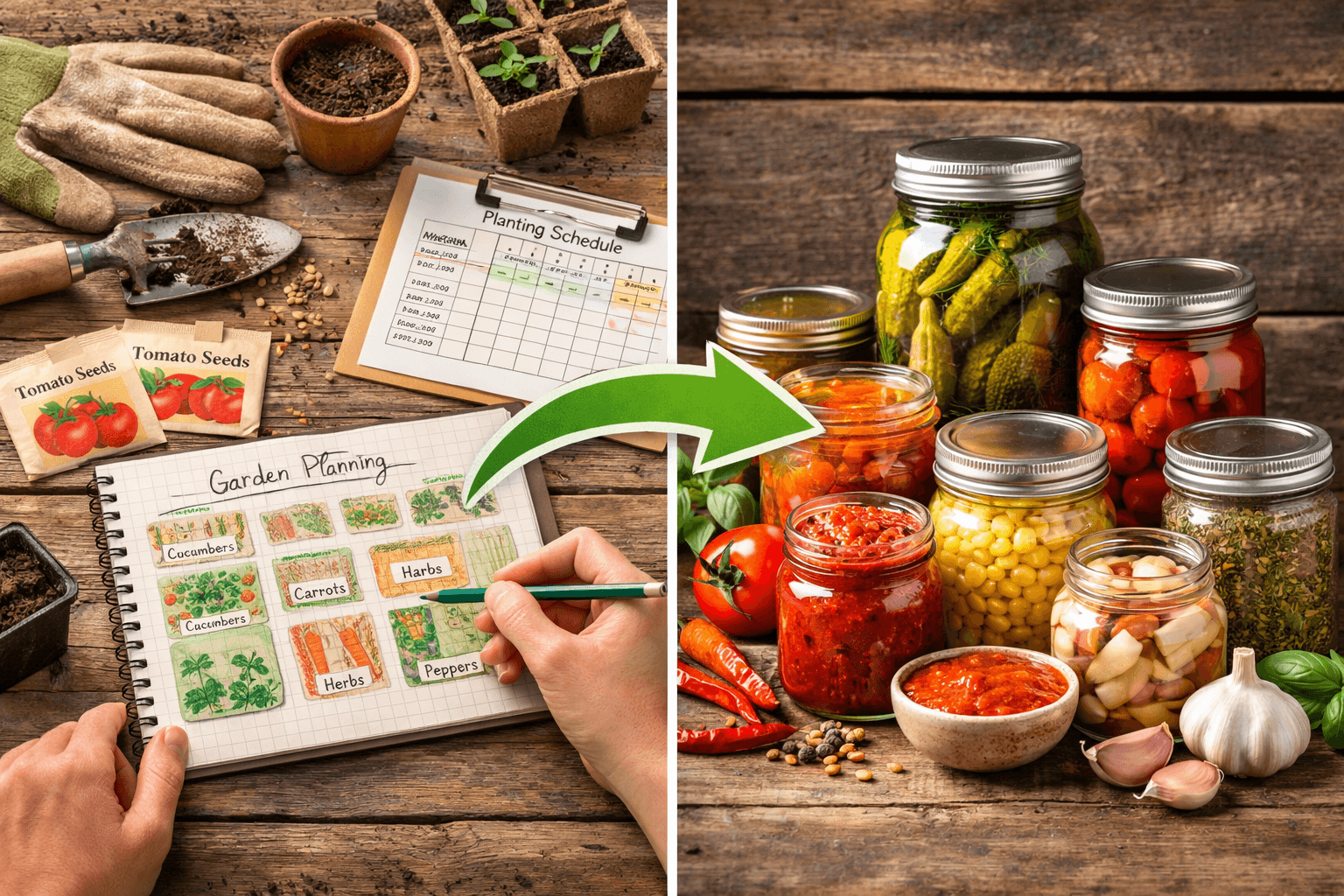
Planning with preservation in mind means making three key decisions before spring planting:
First, identify your staples. What foods do you want available year-round? Maybe it’s tomato sauce for pasta nights, frozen green beans for quick sides, or dehydrated greens for smoothies. Start with three staples you’d genuinely use throughout winter.
Second, quantify your needs. How much of each staple do you actually eat? If you use one jar of tomato sauce weekly, you need approximately 30 jars to make it through the off-season (or 52 jars to make it through a whole year). This rate-based thinking helps you grow appropriate amounts.
Third, work backward to planting. Once you know you need 30 jars of sauce, you can calculate how many tomato plants to grow. Each paste tomato plant typically produces enough for 1-2 jars of sauce, so you’d need about 20-25 plants. Of course it depends on the type of tomato and other factors. Note how many jars of tomato sauce you get this season from X number of plants and plan from that next season.
This planning approach ensures you grow with purpose rather than hope.
How Do You Track Your Garden for Better Planning?
Creating an effective garden plan requires data from your current growing season. A simple harvest log transforms guesswork into informed decisions.
Record three things weekly: What you harvested, how much, and when. Even rough estimates help. “Five bunches of kale this week” or “first tomatoes arrived July 15th” creates useful patterns.
After one season of tracking, you’ll understand your garden’s rhythm. You’ll know when different crops peak, how productive each plant is, and where gaps exist in your harvest. This information becomes the foundation for next year’s preservation-focused garden plan.
One gardener tracking her harvest discovered she was growing $582 worth of produce in just over a month. The harvest log revealed she was averaging eight pounds of fresh greens weekly … enough to dehydrate for year-round green powders plus fresh eating.
What Is a Future Harvest Plan?
A future harvest plan connects your preservation goals to actual garden beds. It answers the question: “How many plants do I need to grow to preserve what I want to eat?”
Here’s how rate-based planning works: Let’s say you want dehydrated green powder for smoothies each day through winter. One bunch of greens (about 10 leaves) dehydrates into 1-2 tablespoons of powder. If winter lasts 150 days and you want one tablespoon daily, you need 75-150 bunches total. If your growing season runs 25 weeks, harvesting and preserving five bunches weekly gets you there.
This mathematical approach takes the guesswork out of garden planning. You’re no longer wondering “Did I plant enough?” You know exactly what you need to grow.
Your future harvest plan includes: Which staples you’re growing for preservation, expected harvest per plant (research or your harvest log data), total plants needed to meet your goals, and when you’ll harvest and preserve throughout the season.
How Does Preservation Planning Change What You Grow?
When you plan with preservation in mind, you make different choices about varieties, quantities, and timing.
You choose varieties that preserve well. Paste tomatoes for sauce instead of slicing tomatoes. Winter squash varieties that cure and store for months. Herbs that dry beautifully rather than lose flavor.
You grow larger quantities of fewer crops. Instead of one plant each of 20 tomato varieties, you might grow 25 plants of three preservation-focused varieties. This creates the volume needed for meaningful preservation without overwhelming diversity.
You consider storage without processing. Some crops (winter squash, onions, garlic, potatoes, beets, carrots) store for months after curing without any processing. These become garden staples because they provide maximum return for minimal preservation effort.
Why Start With Just Three Staples?
The temptation when planning a preservation garden is to preserve everything. Resist this urge.
Start with three foods you genuinely love and eat regularly. Master growing them in the quantities you need. Learn to preserve them efficiently. Build your skills and confidence with crops that matter to you.
Next season, add one or two more staples. Gradually, you’ll develop a garden that reliably produces the preserved foods your household actually uses.
This incremental approach prevents the overwhelm that stops many gardeners from preserving altogether. Three staples done well beats 20 crops that go to waste before you have a plan for preserving them.

How Does This Planning Save Time?
Planning your garden around preservation goals saves time in two powerful ways.
You avoid reactive preservation. Without a plan, preservation happens in crisis mode … suddenly drowning in zucchini, frantically searching for recipes, spending entire weekends canning because everything ripened at once. With planning, you know what’s coming and when, so preservation happens in manageable weekly sessions.
You reduce decision fatigue. Your preservation goals are set months in advance. When harvest arrives, you already know what you’re making and why. No standing in the kitchen wondering what to do with a basket of tomatoes that you planned for tomato sauce back in March.
Restaurant kitchens work this way. They know their menu, prep specific ingredients, and execute efficiently because decisions are made once, not daily. Your preservation-focused garden plan creates the same efficiency.
Creating Your First Preservation Garden Plan
Ready to plan next season’s garden with preservation in mind? Start here:
This season: Begin a harvest log. Track what grows, when, and how much. Notice what you actually eat and preserve versus what sounds good in theory.
Before next season: Choose three staples you want preserved for year-round eating. Calculate how much you need based on your eating patterns. Research or estimate how many plants you’ll need to grow.
Create your garden layout: Dedicate adequate space to your three preservation staples. Don’t let novelty varieties crowd out the crops that will actually feed you through winter.
This simple planning framework connects your garden to your table across all seasons. You’re no longer just growing food—you’re creating a year-round food system.
Want the complete planning framework? The masterclass walks you through the entire system for setting preservation goals, tracking your garden’s productivity, and creating future harvest plans that eliminate guesswork. You’ll learn how to link your garden planning to actual meals on your winter table, ensuring nothing goes to waste and your pantry stays stocked with foods you love. Register now to discover how experienced gardeners plan for abundance without overwhelm.
Register for the Preserving & Storing the Harvest” Masterclass Here