There comes a point in the season when you may look outside and think, Well, I guess we’re about done here. The days are getting shorter, harvests are beginning to slow, and colder weather is on the way.
And if you’re still figuring out summer gardening, the idea of a winter garden might sound like one more thing to learn. But one of the most encouraging ideas in our recent Thriving Gardener class with garden trainer Stacey Murphy was this: winter gardening does not have to look anything like summer gardening.
Your plants may grow more slowly. You may grow different foods. You might protect a small section of your outdoor garden, move some growing indoors, or simply keep harvesting crops that are already in the ground. There are several different ways to extend your growing season.
And this is where the full training goes much deeper, because what works depends on your temperatures, timing, available space, and what you actually want to grow.
Seeing how those different possibilities work is where winter growing starts to get really interesting.
▶ Watch the full Keep Growing masterclass with Stacey Murphy here 🎥
Why Does Garden Growth Slow Down in Winter?
Shorter days mean plants receive fewer hours of sunlight, so growth naturally slows as winter approaches.
A spinach plant that produced quickly earlier in the season may keep growing through winter, but much more slowly.
That means a winter garden does not necessarily keep producing food at summer speed.
Instead, you could think about your garden can become a kind of outdoor refrigerator.
You get crops established, acknowledge that growth is going to slow, protect them when needed, and harvest them gradually through the winter.
That gives you a very different way to think about the end of the gardening season.
Do You Have to Harvest Everything Before Winter?
No. Some cold-sensitive crops need to be harvested, while others can stay in the garden under the right conditions.
Crops that will die when temperatures get cold, including tomatoes, peppers, and cucumbers, need to be harvested and eaten or preserved. Herbs can also be harvested and dried for teas, soups, and cooking.
But some foods can stay right where they are.
Carrots, beets, radishes, and parsnips can remain in the ground under the right conditions. Stacey described the ground as a type of cold storage.
The challenge is access. If the soil freezes solid, you may not be able to get those vegetables out until it thaws. Stacey explained that covering them with a cold frame can help keep them in a frost-free environment.
So can your garden itself help preserve fresh food?
Yes. Sometimes preserving the harvest does not mean moving everything into jars, bags, or the freezer. Some crops can remain protected in the garden and be harvested later.
What Vegetables Grow Well in Cold Weather?
Cold-tolerant crops include many leafy greens, root vegetables, members of the cabbage family, onions, garlic, and several herbs.
Stacey discussed crops including kale, collards, cabbage, turnips, radishes, mustard greens, spinach, lettuce, arugula, carrots, beets, parsnips, garlic, scallions, leeks, parsley, cilantro, chives, and thyme.
Some tolerate cold particularly well. In the Q&A, Stacey specifically called out kale, collards, spinach, and mustard greens as especially hardy choices.
And there is another fun benefit: some vegetables get sweeter in colder temperatures. Stacey talked about carrots, beets, onions, kale, and spinach becoming sweeter in the cold.
She also described the joy of walking through the snow, opening a cold frame, and finding fresh plants inside. Winter gardening can offer a very different experience from growing during the warmer months.
Do You Need a Greenhouse for Winter Gardening?
No, you do not need a greenhouse to extend your growing season.
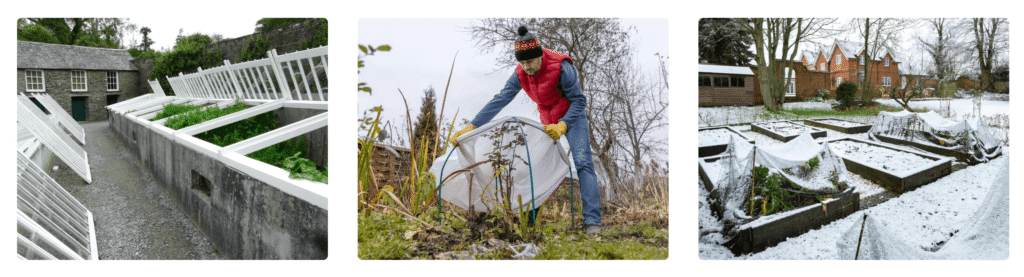
During the class, Stacey discussed cold frames, hoop houses, medium tunnels, temporary coverings over plants, containers that can be moved indoors when nighttime temperatures drop, and indoor growing.
Your winter garden might be:
• a protected bed of hardy greens
• root vegetables left in the ground under protection
• salad greens growing under lights indoors
Or you could use more than one approach.
The goal is not to create an elaborate winter garden. You can choose an option that fits your space and what you want to grow.
Can You Grow Fresh Food Indoors Without a Backyard?
Yes. Indoor growing can be a practical option when you do not have outdoor garden space.
Stacey’s own first garden is a good reminder of this. When she began growing food in Brooklyn, she lived in a studio apartment without a backyard. She used shelves and grow lights to grow arugula, basil, parsley, and salad greens. She was able to harvest salad for herself from just a few shelves indoors.
Stacey also recommended shoots and microgreens for indoor growing, along with greens such as lettuce and spinach.
For growing greens indoors, she emphasized the importance of using grow lights.
So a winter garden does not necessarily require an outdoor garden at all. It might simply be a few shelves or trays of something fresh to eat.
When Should You Start Planning a Winter Garden?
Winter gardening begins before the coldest part of winter because crops need time to become established before growth slows.
Stacey used spinach as an example. It often takes about four weeks to grow from seed to the point where you can begin harvesting leaves. As temperatures cool and daylight decreases, that same growth may take longer. Once established, spinach can remain through the winter, although its growth may slow significantly.
That is why it’s important to know your local temperatures, paying attention to your own microclimate, and planning crops around those changing conditions.
And you do not have to create an entire winter garden at once.
Maybe you grow one bed of greens.
Maybe you protect root vegetables already growing.
Maybe you try microgreens indoors.
The bottom line is simple: your growing season does not automatically have to be over just because winter is coming.
If you’re wondering what that could look like where you live, Stacey goes much deeper into crops, timing, different protection methods, indoor growing, and questions from gardeners in the full class.
Ready to Keep Growing This Winter?
If you’re ready to go beyond inspiration and create a winter garden that fits your own climate and space, the Winter Gardening Course walks you through both indoor and outdoor growing.
Inside the course, you’ll learn how to:
• match your climate to the right kind of winter garden
• choose crops that fit your winter temperatures
• grow fresh greens indoors with grow lights, shoots, sprouts, and microgreens
• time your planting so you can keep harvesting as the season changes
• create microclimates and use season-extension methods such as tunnels and covered beds
The course includes five video lessons, Winter Gardening Cheat Sheets, transcripts, and lifetime access so you can work through it at your own pace.