Nobody tells you about this part of gardening. You get instructions for spacing, watering, and fertilizing. You get charts and guides and schedules. And those things matter. But at some point, if you have spent any real time with your hands in the soil, you have probably felt something that none of those instructions quite prepared you for. A pull toward a particular plant. A moment of stillness that felt oddly restorative. A strange grief when something dies that you did not expect to care about that much. That is not sentimentality. That is your garden reaching back toward you, and most gardeners have never had a framework for what to do with it.
The Spirit Gardening masterclass from Grow Your Own Vegetables explores exactly that territory. It is built around a five-stage process that reframes what gardening actually is (not a set of tasks to complete, but a relationship to develop). The insights draw on quantum biology, neuroscience, and something harder to name: the kind of knowing that experienced gardeners carry quietly, season after season, without quite having the words for it. 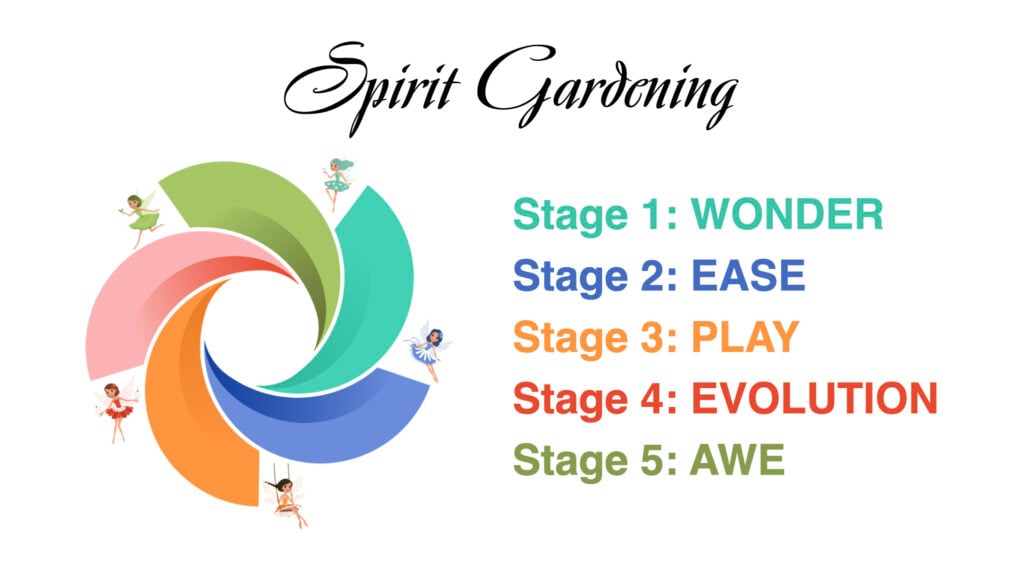 What follows are a few of the ideas that surfaced in that masterclass. They are the kind of insights that tend to reorganize how you see your garden — and, unexpectedly, how you see yourself.
But to be honest: reading about this process and actually experiencing it are two very different things. The masterclass goes into the lived texture of this approach in ways that words on a page can only gesture toward.
What most gardeners don’t expect is how quickly this framework surfaces something personal — and the masterclass shows you exactly what to do when it does.
The Question That Changes Everything
Most gardeners come to the soil with tactical questions. How often do I water? When do I plant? Why are my leaves yellowing? Those questions have their place. But there is a quieter, more powerful category of question that rarely gets asked: What is this plant actually doing, and what does it want?
The masterclass opens with what it calls Wonder … a stance of genuine, unhurried curiosity about what is happening in your garden beyond what you can see. Not wondering in a vague, motivational-poster sense, but in a specific, scientific one. Plants communicate. Root systems and mycelium networks carry signals underground that researchers are only beginning to map. The visible portion of the electromagnetic spectrum that your eyes detect is a tiny fraction of the information that exists in your garden at any given moment.
It is worth remembering in the garden that the most curious people are often the most capable learners, not because they know more, but because they keep asking. And in the garden, where it can feel like you are supposed to already know things, that reframe matters. The gardeners who grow the most interesting things, and who find the most satisfaction in the process, are usually the ones who never stopped asking questions that do not have clean answers.
Questions like:
Why does this plant grow straight up while the one beside it splits in two?
What frequencies is this tomato putting out right now?
Why does this corner of my bed feel different than that one?
These are not frivolous questions. They are the beginning of a different kind of attention … one that the masterclass suggests can genuinely change what you grow, and how much you enjoy growing it.
What Nature Does While You Are Not Watching
Here is something worth sitting with: a seed, given the right temperature and a little moisture, sprouts entirely on its own. Trillions of cells in your body breathe, digest, and repair while you sleep. The vast majority of flourishing that happens in a healthy garden happens without your direct involvement. Your role is not to make growth happen. Your role is to create the conditions for growth and then get out of the way.
The masterclass frames this as Ease, and it is probably the most quietly challenging stage for most gardeners. Ease is not passivity. It is a specific, practiced orientation toward your garden: focusing on what is thriving rather than fixating on what is failing, listening to which plants you feel genuinely drawn to (that pull is data, not whimsy), and trusting that your presence in the garden is itself a contribution.
This is not passive or wishful. The masterclass is clear that ease requires active attention — specifically, the practice of noticing what is already working rather than fixing your gaze on what is not. That orientation, practiced season after season, changes how you experience the garden at a fundamental level.
A few things that shift when gardeners practice this stage:
•They stop fighting the plants that naturally thrive in their conditions and start learning from them instead.
•They pay closer attention to which plants they feel genuinely drawn to and start treating that intuition as useful information rather than sentiment. •They spend less time in the garden feeling behind, and more time feeling genuinely present.
When the Garden Becomes a Place to Experiment
Between settling into ease and working through what the garden stirs up, there is a stage the masterclass calls Play. It is exactly what it sounds like: approaching your garden with low stakes, genuine curiosity, and a willingness to try something without needing it to work. Plant the herb in the unexpected spot. Follow the instinct you cannot quite explain. Notice what nature does when you stop managing every variable. Play is not about being casual with your garden. It is about recognizing that some of the most useful discoveries only happen when you are not trying to force an outcome.
The Part Nobody Talks About: What to Do When the Garden Hurts
A rat eats the entire crop you tended through a long season. A late frost takes the seedlings you started in February. A plant you loved simply dies, and you cannot figure out why. If you have gardened for any real length of time, something like this has happened to you. And if you are honest, the feeling it left behind was probably larger than the situation seemed to warrant.
The masterclass names this directly, in a stage it calls Evolution. The claim is specific: guilt, shame, and frustration that surface in the garden are not just about the garden. They are reflections of patterns you carry into every area of your life. The garden, because it is tangible and low-stakes in the right ways, gives you a safe place to actually feel those emotions and ask where else they show up. What this means practically is that a failed season is never just a failed season. It is information, the kind of lesson about patience, about control, about what you are actually attached to, that you will not forget because you grew it.
Nothing is wasted in nature. That turns out to be true for the difficult seasons, too.
Gratitude Is Not a Metaphor … It Is a Mechanism
The masterclass references studies showing that plants respond to positive affirmation … that the energy and attention directed toward them appears to have a measurable effect on how they grow. While the science is still being mapped, the premise is taken seriously by researchers working in quantum biology, and it reshapes how the masterclass frames the gardener’s role in the garden.
The masterclass calls the fifth stage Awe, and it frames gratitude as the most potent input a gardener can bring to the garden. Not as a ritual or a performance, but as a genuine, practiced state of appreciation for what is growing. The mechanism behind it: your heart generates an electromagnetic field that is significantly stronger than the one around your brain. Your mind sets the intention. Your heart provides the pull. When both are aligned in genuine gratitude, the masterclass describes that state as coherence — and suggests it is measurable, not just felt.
Most gardening advice ends at technique. This is where something deeper begins.
This Is Only the Beginning
The five stages (Wonder, Ease, Play, Evolution, Awe) form a cycle, not a checklist. Each pass through them deepens something. Gardeners who have worked with this framework describe it as changing not just how they grow food, but how they move through difficulty, how they notice beauty, and how they understand their own emotional patterns. That is a large claim. It is also the kind of claim that can only be evaluated by experiencing it, not by reading about it.

👉 Watch the free Spirit Gardening masterclass and download the companion cheat sheet here.
You are already paying attention in exactly the right way. This gives that attention somewhere meaningful to go.