
Sometimes life pulls your attention away from the garden. When you return, you may find struggling plants, disease, or signs that pests moved in while you were gone. This happens to experienced gardeners too, and it does not mean the whole garden is lost.
In this video, Stacey takes you into her own neglected garden and shares how she decided what to remove, what could still recover, and what needed a longer-term response. Watch the video to see how she worked through each problem, then continue below for the most important lessons you can use in your own garden.
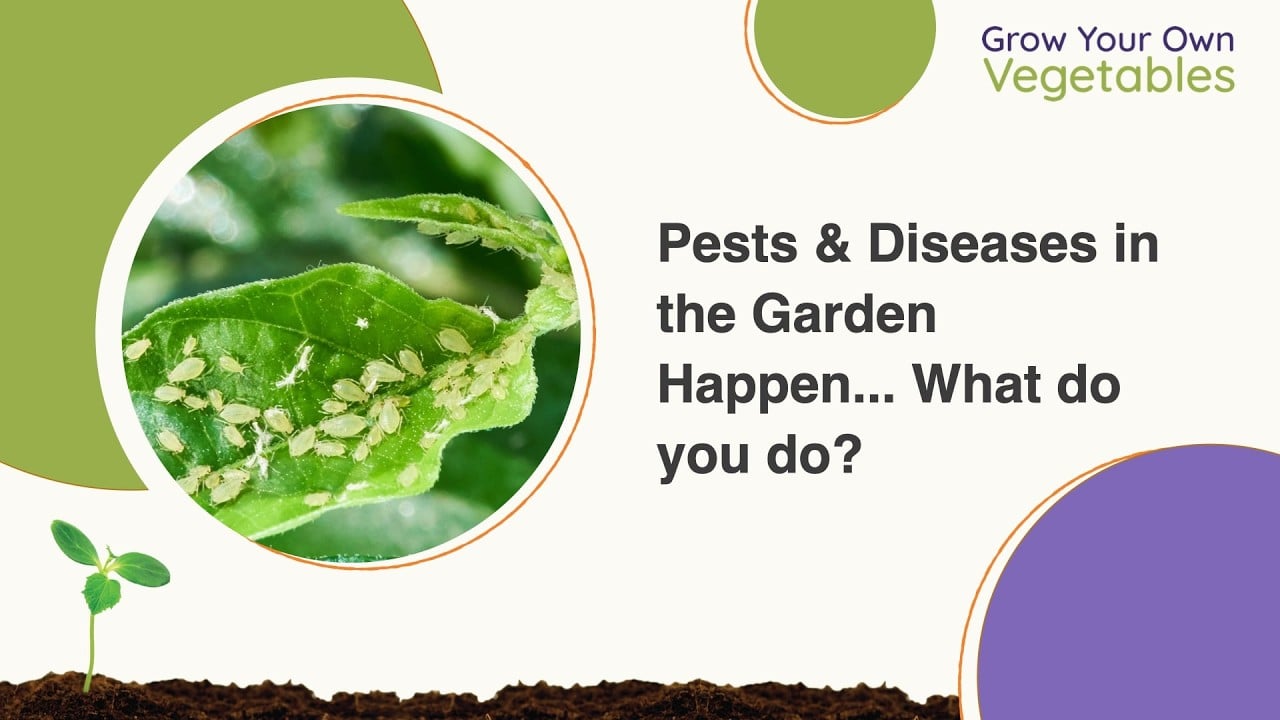
What to Do When Pests and Diseases Appear in a Neglected Garden
Sometimes the hardest part of returning to a neglected garden is knowing where to begin.
You may see damaged leaves, struggling plants, or signs that pests and diseases have spread while you were away. When several things need attention at once, it can feel as though the whole garden needs to be rescued immediately.
But as Stacey shares in the video above, garden problems do not mean you have failed. Life gets in the way sometimes, and gardens keep changing while our attention is elsewhere.
When pests or diseases appear after a garden has been neglected, begin by noticing what is still healthy, removing what cannot recover, and responding to the specific problem rather than treating the whole garden the same way.
What should you do after neglecting your vegetable garden?
Start by taking stock.
Some plants may not recover. It is okay to feel disappointed, remove those plants, and move forward. Other plants may still have healthy, vital growth that can respond to renewed care.
A simple place to begin is to:
• Remove plants or diseased material that will not recover.
• Support the plants that still show vital growth.
• Keep observing before deciding what else to remove.
You do not need to restore everything at once. You are simply deciding what the garden needs next.
Can tomato plants recover from fungal or bacterial disease?
Diseased leaves do not always mean the whole tomato plant is lost.
When Stacey returned to her garden, several tomato plants had been affected by fungal and bacterial diseases. Because they were indeterminate tomatoes, they could continue producing new growth through the season.
She carefully cut away the diseased portions while keeping the growth that still looked vital. She also cleaned her scissors between each plant in case the plants had different diseases.
Stacey then added about two inches of compost to the bed. It was already time to add more organic matter as part of her seasonal fertility cycle, and she hoped the combination of removing diseased material and supporting the soil would help the tomatoes thrive.
After a weekend away, the plants already looked healthier. She did not know whether they would produce as many tomatoes as they might have otherwise, but she still expected to harvest some fruit.
Why is a plant wilting when it has enough water?
A wilted plant does not always need more water.
In Stacey’s garden, a Swiss chard plant was wilting even though it had enough water. The problem was that water was not moving properly from the roots into the plant.
The cause was nematodes. These very small organisms feed on plant roots and can cause swelling or nodules. Above ground, a gardener may notice wilting or yellowing leaves.
Nematodes can remain in the soil for a long time, so this was not a quick problem to solve. Stacey removed Swiss chard plants that were clearly affected while leaving some that still looked okay. She temporarily replaced some of the chard with French dwarf marigolds, which are less susceptible to the nematodes.
For future seasons, she planned to consider crop rotation and crops that are resistant to nematodes.
Do different garden problems need different responses?
Yes. A disease affecting tomato leaves, nematodes affecting plant roots, and rats eating garden crops are different problems and call for different responses.
While Stacey was away, tree rats ate her parsley and kale nearly to the ground. Because the rat population in her area increases during summer, she considered caging the garden temporarily or throughout the year.
The tomato plants could be pruned and nourished. The nematodes required observation and longer-term crop planning. The rats might require a physical barrier.
Taking time to notice what is actually happening can help you choose a response that fits the problem.
Start With What Is Still Growing
A little neglect can allow garden problems to spread quickly, but that does not mean everything is lost.
Remove what is not going to make it. Then look at what is still vital and give those plants some support. Stacey suggests compost, worm castings, or another source of nourishment where appropriate.
You may not save every plant or harvest exactly what you expected. But you can support the plants that still have life in them and move forward from where the garden is today.
For a closer look at how Stacey responded to tomato disease, nematodes, and animal damage in her own garden, watch the full video above. Her real-life examples offer a deeper look at what she removed, what she nourished, and what she chose to keep observing.
What is your garden showing you right now?
Have you noticed a plant that may need a different kind of support than you first thought? Share what you are seeing in the comments below.
Want More Help With Pests and Diseases?
Pests and diseases are a natural part of gardening, but you can learn to recognize patterns, reduce damage, and support healthier plants over time. The Pest & Disease Micro Course teaches a practical 4-step management process, along with prevention strategies, identification guidance, and resources you can use in your own garden.




Hi Stacey
Thanks for video. On the rat issue I don’t know if you are aware of a new style of rat trap that is in use downunder here in Australia and New Zealand. I found it very effective and eco friendly and easy to use as you don’t have to keep resetting it. Its called an A24 rat and mouse trap and here it is made and supplied by Goodnature. If you Google it you will find it and there are some video clips on Youtube. The only downside is that it is a bit expensive but it should last a long time as it is well made and engineered.
Regards,
Les K.
It sounds like your soil may be out of balance. Maybe have it tested to see what kind of microorganisms you have. Consider an inoculum of beneficial bacteria, fungi, and nematodes to take care of the bad guys. Check out Dr. Elaine Ingham, she is the foremost authority on soil microbiology.
Hi Stacy, I did your free online gardening summit a few months ago. I started everything from seeds in my garage greenhouse… followed your advise with lots of compost( homemade and from the nursery. I’ve been planting my seedlings over the last couple months and my garden is really flourishing. I’m harvesting lots lettuce, kale, Bok Choy, Rainbow chard, and radishes every week… and my snap peas and sugar peas are taking off. With zucchini , cucumbers and tomatoes recently planted. I’m trying to keep any old leaves trimmed off and harvest regularly. So far not much pest problem. I learned so much much from you and my garden looks better than it ever has!!! Thank you!!!
Good to help plants
Hi Stacey thanks a lot for your sincere sugestions about how plants get pests and diseases as any living creature and the most important not to let oneself down or judge…..the good news is that garden is a learning life school and that always we can find solutions to thrive. By the way I had also fungus in my Tomatos and I made one liter ofnatural pesticide with 200ml of skimed milk, a teaspoon with bicarbonato sódico for human use and water 800ml. And it seemed it’s working Thanks a lot for sharing your videos and knowledge. Gonzalo from Madrid, Spain
My cauliflower flowerets have separated & some growing longer thanthe others. only one plant looks normal. Have yet to read & try to find out. the broccoli are doing fine