
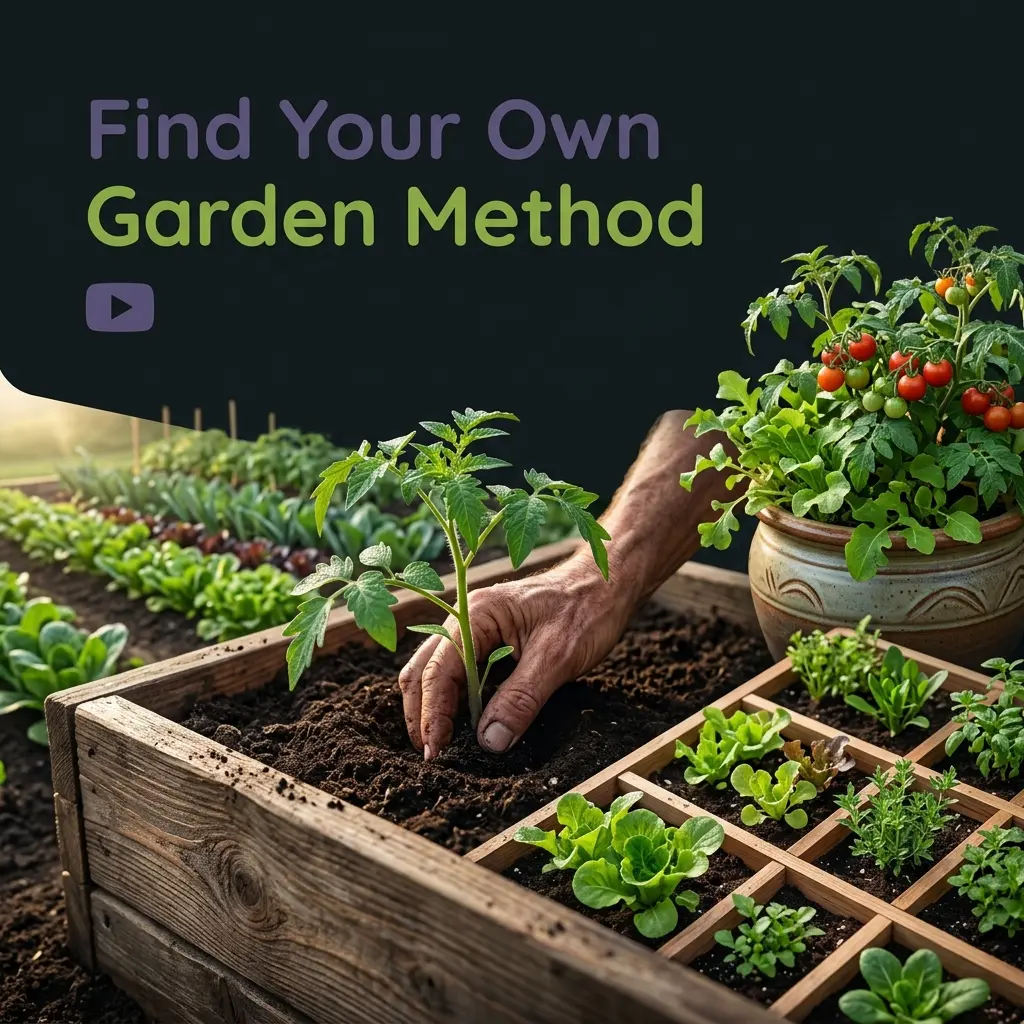
You’ve probably noticed it already. Some gardeners seem to harvest abundantly while genuinely enjoying their time in the garden, while others work twice as hard yet feel disconnected from the process. The difference isn’t luck, and it’s not some secret green thumb gene.
It’s the method they chose at the beginning.
Most gardeners pick their approach based on what sounds easiest or what they saw on social media last week. But the way you structure your garden from day one determines whether you’ll spend your summer problem-solving or actually savoring fresh tomatoes and the satisfaction of growing your own food.
The main garden methods include: traditional row gardening, raised bed gardening, container gardening, square foot gardening, and no-till or lasagna gardening. Each has different time commitments, setup costs, physical demands, and maintenance patterns. The best choice depends on your available space, time, physical abilities, climate, and what you’ll genuinely enjoy maintaining season after season.
Your garden method should match your actual life, not an idealized version of it. But understanding which methods actually deliver on that promise—and which create unexpected complexity—requires seeing how they perform across real seasons, climates, and the daily realities gardeners face.
Why Choosing the Right Garden Method Matters
You can amend the soil. You can adjust watering schedules. You can even relocate plants mid-season.
But once you’ve committed to a method and built your garden structure, making major changes takes significant effort and time.
Traditional row gardening works beautifully if you have space and enjoy regular maintenance routines. Raised beds offer excellent control and can be easier on your back, though they require upfront investment and ongoing soil care. Container gardening provides wonderful flexibility but asks for more frequent attention to watering.
The method you choose creates a relationship between you and your garden. Some relationships flourish with daily connection. Others thrive on weekly attention. And some are perfectly suited to your unpredictable schedule.
What to Consider When Choosing a Garden Method
Here’s what many gardeners discover in year two: they’ve learned so much about what truly works for their lifestyle.
Maybe those raised beds produced beautifully in spring, and now you’re realizing you’d love a lower-maintenance approach for summer. Or that container garden worked wonderfully, and you’re thinking about how to make watering easier during vacation season. Or those traditional rows yielded well, and you’re exploring ways to garden with less bending and kneeling.
The most empowering question isn’t “What’s the best garden method?” It’s “Which method will I genuinely enjoy maintaining in August when I’m in the rhythm of the season?”
This distinction matters because gardening success isn’t just measured in May when everything is fresh and exciting. It’s measured in late summer when you’re still engaged, when tending your garden feels nourishing rather than like another task on your list.
Different garden methods have different effort patterns:
• Some front-load the work – more intensive setup, then easier ongoing care
• Some distribute effort evenly – consistent, manageable attention throughout the season
• Some have seasonal rhythms – gentle most days, with focused attention at key moments
Understanding these patterns helps you choose a method that aligns with how you naturally function, setting yourself up for genuine enjoyment rather than constant adjustment.
How Different Garden Methods Fit Different Lifestyles
When your garden method fits your life, something shifts.
You feel confident in your approach. You stop comparing your garden to others. You start celebrating what’s actually working instead of second-guessing your choices.
Your garden doesn’t need to look like anyone else’s garden. It needs to produce food that nourishes you, fit the time you have available, and work within the resources you can joyfully sustain.
This might mean choosing a method that feels authentic to you, even if it’s not the trendiest approach. It might mean combining methods in creative ways that solve your specific situation beautifully.
Key Factors for Choosing Your Garden Method
When choosing between garden methods, consider these key factors:
• Time availability across different seasons
• Physical capabilities and limitations
• Budget for both setup and ongoing maintenance
• Climate factors that favor certain approaches
• Space constraints and sun exposure
This framework brings clarity. You’ll understand why certain methods keep appearing in your research and whether they’re truly a good fit for your situation.
Even better, you’ll learn to recognize when advice applies beautifully to your context versus when it’s designed for conditions you don’t share. This wisdom helps you move forward with confidence rather than spending seasons following guidance that was never meant for your unique garden.
What This Means for Your Next Growing Season
You have a choice right now. You can continue exploring and learning as you go, discovering what works through your own experience over time. Many gardeners love this hands-on journey of discovery.
When gardeners commit to a method for multiple seasons, they often discover unexpected benefits that weren’t obvious in year one. Over time, they learn which systems save effort, which habits feel natural, and which adjustments make their gardens more productive and enjoyable.
The goal isn’t to choose the “perfect” garden method. It’s to choose one that fits your space, schedule, budget, and energy level well enough that you’ll still enjoy gardening three years from now.
When your garden method supports your lifestyle, growing food becomes less about constant problem-solving and more about harvesting, learning, and enjoying the process.
Before choosing a garden method, take a few minutes to think about how you naturally like to spend your time. Do you enjoy daily interaction with your garden, or would you prefer a system that can go a few days without attention? Do you love planning and organization, or do you prefer a more flexible approach?
The answers to those questions will often point you toward the right method more clearly than any gardening trend or recommendation ever could.
Which garden method are you using this season—and what’s one thing you’ve learned about how it fits (or doesn’t fit!) your lifestyle? Share below ⬇️
Grow More in Less Space
Container gardening can be a simple way to grow fresh food, even if you only have a patio, balcony, or small growing area.
The Container Gardening Micro Course walks you through choosing containers, soil, and plants so you can avoid common frustrations and create a setup that supports healthier, more productive plants.




You talked about a watering system. What is the name of it and where do I order it from please?