You add compost. You water carefully. You choose varieties that should grow well where you live. You’re doing what you’ve been told are the “right” things and still, your tomatoes struggle or your plants just don’t seem to thrive. When that happens, it’s easy to wonder: What am I doing wrong?
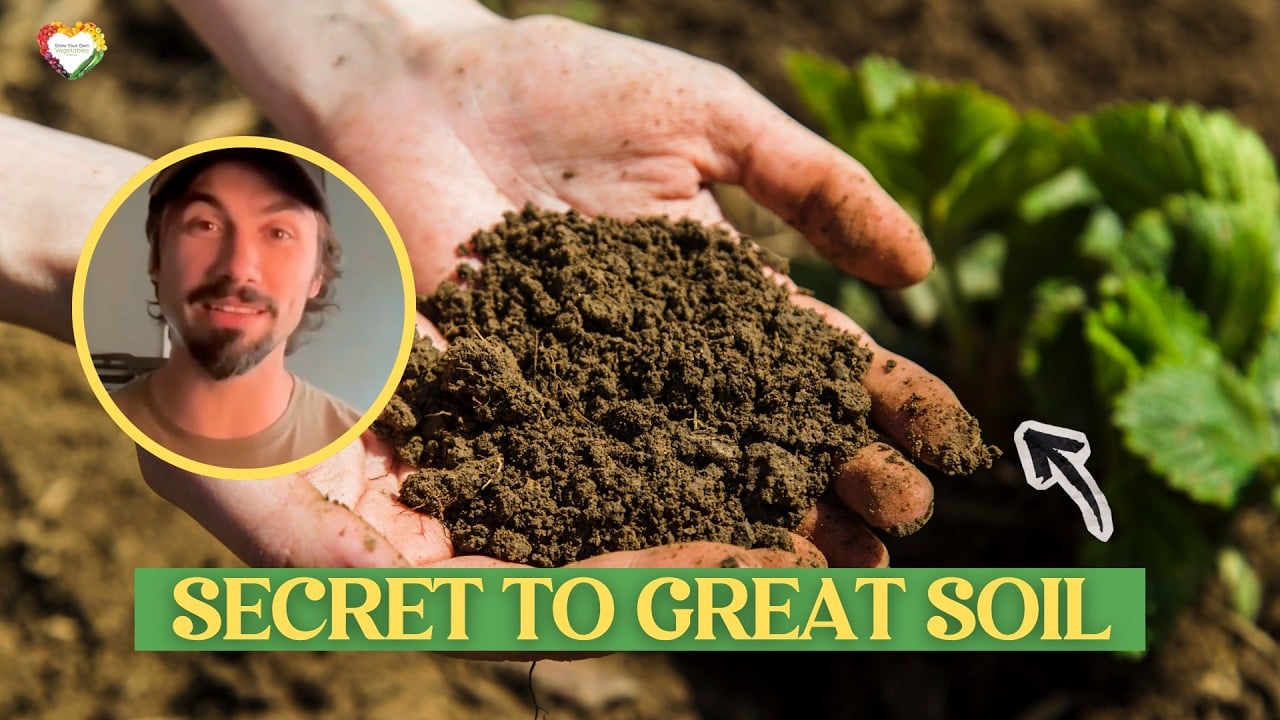
But what if the better question is: What’s happening in my soil? Understanding what you already have may be one of the most important places to start when you want healthier garden soil and stronger vegetables. That’s one of the ideas soil educator and Regenerative Soil author Matt Powers explores in this conversation from the Superfood Garden Summit.
When asked the most important thing a beginning gardener can do for their soil, Matt’s answer wasn’t to buy a particular amendment or add more fertilizer. It was much simpler: understand the soil you already have. Because sometimes struggling plants aren’t asking us to add more. There may be something happening beneath the surface that we simply don’t know about yet.
Watch the conversation below as Matt Powers answers real gardeners’ questions about building healthier, living soil.
How Do You Improve Garden Soil? Start by Understanding It
As gardeners, we have a lot of possible solutions within reach. There are fertilizers, compost blends, soil amendments, minerals, microbes, teas, and plenty of products promising healthier plants and bigger harvests.
And when something isn’t growing well, it can be tempting to start trying them.
But before you reach for another bag of something to “fix” the problem, it may be worth finding out what’s actually happening in your soil.
Matt gives an example many gardeners may never consider. Something could have entered your garden through purchased compost, horse manure, a treated lawn, or even drift from nearby agricultural land. From your perspective, all you see is a tomato that won’t grow or corn that struggles.
So you add fertilizer. Or change your watering. Or decide you must have chosen the wrong variety.
But none of those things necessarily addresses what’s actually happening.
Why aren’t my vegetables growing well even though I’m feeding and watering them?
Sometimes poor growth isn’t simply a sign that plants need more fertilizer. Matt recommends first understanding the soil you’re growing in. A basic soil test can reveal conditions such as pH and give you a clearer starting point before you decide what to add.
The goal isn’t to become a soil scientist. It’s to become a more observant gardener.
Why Soil Structure and Biology Matter in a Vegetable Garden
One of the biggest shifts we can make as gardeners is to stop thinking about soil as simply the “dirt” our vegetables grow in.
Matt describes healthy, moist soil as having structure and air within it. He also talks about microbes that live in and around plants and the relationships between those microbes, plants, and soil.
That means adding nutrients to a plant and improving the conditions in the soil aren’t necessarily the same thing.
Matt has spent years exploring soil through microscopy, DNA testing, and work with gardeners and farmers. He describes using that work to identify better practices that can help growers reduce fertilizers, pesticides, and other biocides while improving their soil, yields, and what they grow.
For a home gardener, you don’t need a microscope to begin applying the bigger idea.
You can start thinking less about what else you can add and more about what is actually happening in the soil supporting your vegetables.
And when your goal is fresh, abundant food from your own garden, that difference matters.
How to Make Good Compost Without Overcomplicating It
Composting is a perfect example of something gardeners sometimes make harder than it needs to be.
Turn it this often. Get the ratio exactly right. Buy the right bin. Monitor the temperature. Add the right ingredients.
It can be enough to make a beginning gardener decide composting is something to tackle “someday.”
Yet one of the most memorable ideas Matt shares is that really good compost can be as much about what we don’t do as what we do.
He talks about the kind of compost many of our grandparents made. Organic material accumulated and was largely left alone to break down. Pull back the pile, dig underneath, and there was beautiful compost waiting.
There is certainly more science we can learn about composting. Matt discusses the Johnson-Su method, for example, and how it moves through different composting processes over time. But you don’t need to master all of that to appreciate the simplicity behind his point.
Matt even says some of the most fungal compost he has ever seen was made from something remarkably simple:
Leaves. Just leaves.
It’s a helpful reminder for those of us who want to grow healthier food without turning gardening into another complicated job. Sometimes doing less and allowing organic materials time to break down can produce remarkably good compost.
What If You Don’t Have Enough Compost?
This is a common challenge, especially if you’re starting a new garden or trying to improve your soil.
Do you need enough premium compost to cover your entire garden?
Not necessarily.
One idea Matt shares is using a smaller amount of good compost to make a compost extract—a quick form of compost tea. Rather than using all of a limited supply in a small area, he suggests making an extract and watering that into the new garden.
He also talks about using good purchased compost as a biological starting point for compost you eventually make yourself.
Over time, materials you already have can become part of that process.
Leaves.
Kitchen scraps.
Chicken bedding and material raked from the yard.
Manure, if you keep animals.
Instead of assuming every improvement has to come from something you buy, you can begin looking at what you already have available to build compost and support your soil.
Can You Use Chicken Manure in a Vegetable Garden?
Yes, but Matt cautions that chicken manure can be very high in nitrogen. Used directly or in excess, it can burn plants or create an imbalance.
His solution is wonderfully practical: put it in the compost.
Matt combines kitchen scraps with chicken bedding and other material from the yard and lets those ingredients break down together. He even puts the chickens to work scratching and mixing the pile.
It’s a simple example of a much bigger idea. More isn’t always better.
And even a useful garden material needs to be used in a way that makes sense for the soil and plants.
Grow the Soil That Grows Your Food
We spend a lot of time thinking about what happens above ground.
What should I plant?
When should I water?
What’s eating my kale?
Why aren’t my tomatoes producing?
But every one of those plants depends on what is happening beneath the surface, too.
And maybe healthy soil becomes a little less mysterious when we stop thinking we need to know everything about it and start getting curious about it instead.
Matt makes it clear that building your own compost and developing biology adapted to your particular site can take time. But that process can begin with simply understanding what you’re working with and making more informed choices from there.
The reward isn’t simply “better dirt.”
It’s creating better conditions for the vegetables, herbs, fruits, and other foods you’re trying to grow.
Ready to Grow Beyond Healthy Soil?
Healthy soil is the foundation—but it’s only one part of growing a garden that truly feeds you.
Inside the Superfood Garden Summit, Matt Powers joins a lineup of trusted garden, food, and wellness experts sharing practical ways to help you build healthy soil, grow more abundant food, make better use of what you harvest, and create a garden that supports your health and everyday life.
Watch Matt Power’s presentation on Regenerative Soil for an Abundant Harvest plus 15 other presentations to help you optimize your garden!
Whether you’re just getting started or you’ve been gardening for years, you’ll find ideas you can put to work in your own garden—without having to piece everything together on your own.