A garden does not have to be perfect to be worthwhile.
It does not have to be large, beautifully organized, or overflowing with produce. It does not even have to go the way you planned.
And right now, learning how to grow even a little of your own food can feel especially meaningful. Growing food gives us a closer connection to what we eat, a better understanding of where food comes from, and practical skills we can carry with us from one season to the next.
Growing your own food can build practical gardening skills, strengthen your connection to what you eat, and give you more confidence in providing fresh food for yourself and others.
For many gardeners, some of the most meaningful parts happen long before the harvest reaches the kitchen. They happen when the first seed sprouts, when a struggling plant recovers, when you notice something new about your soil, or when you realize you understand your garden a little better than you did last season.
That is part of what makes growing food so rewarding. You are not simply producing vegetables. You are building a relationship with a living system, while learning skills that can help you provide fresh food for yourself and the people you care about.
You Do Not Have to Know Everything Before You Begin
It is easy to imagine that “real gardeners” somehow know what to plant, when to water, how to build healthy soil, and what to do whenever something goes wrong.
In reality, every gardener learns by growing.
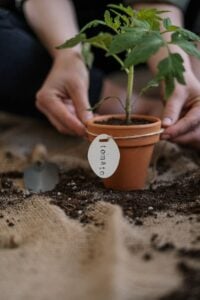
Nancy spent decades dreaming about an edible landscape before beginning with her first vegetable plant, a tomato she affectionately named Tomatini. That one plant became part of a much bigger vision for a future Courtyard Cornucopia. Small beginnings matter.
Maybe yours is a pot of herbs near the kitchen. Maybe you are sprouting seeds for the first time. Maybe it is one tomato plant on the patio.
You do not need to begin with an entire garden. Growing one thing helps you begin learning how plants respond to sunlight, water, soil, weather, and your particular space.
And once you know how to grow one thing, you have something to build on.
A Setback Is Information, Not the End of the Story
Lisa, a second-year gardener in Ohio, had an unsuccessful first attempt. But she kept learning and growing. Her next season brought abundant cucumbers and squash, enough to share with others.
That is a very real part of gardening.
A garden is always responding to weather, soil, water, insects, timing, and the changing conditions around it. We can support those relationships, but we cannot control every part of them.
When something struggles, we notice. We adjust. We try again. Even experienced gardeners continue doing this.
Lorraine has gardened for years, yet she still experiments, simplifies, adapts, and discovers better ways to grow. Experience does not mean you stop learning. It often means you become more comfortable observing what is happening and making adjustments along the way.
A Few Fundamentals Give You Something to Build On
Garden confidence tends to grow less from memorizing rules and more from understanding a few basic relationships.
Choosing crops that fit your space and that you actually enjoy eating gives you a stronger starting point. Healthy soil and compost help create conditions where roots, microorganisms, and plants can thrive. Learning how and when to water helps plants handle stress and develop stronger root systems.
None of these skills has to be mastered all at once. Each growing season adds another layer of understanding. And those skills matter beyond one harvest.
Knowing how to start a seed, improve your soil, care for a plant, and bring food from the garden to your table gives you a greater connection to your own food supply. Even if you never grow everything you eat, being able to grow something is valuable.
The Harvest Is Only Part of What You Grow
Of course, bringing fresh vegetables into the kitchen is deeply satisfying. But gardeners often discover that something else grows alongside the food.
There is the joy of walking outside and seeing what changed overnight. There is curiosity when something unexpected appears. There is confidence when you solve a problem you did not know how to solve last year.
There is also a different relationship with food when you have watched it grow from seed to harvest. And sometimes there is even enough to share!
A handful of herbs for a neighbor. Cucumbers for a friend. A tomato you grew yourself placed on the dinner table. These moments are part of the harvest too.
Why Is Growing Your Own Food Worth Learning?
Because growing food gives you more than produce.
It helps you understand the natural systems that support your meals. It gives you practical skills you can strengthen over time. It can build confidence, curiosity, patience, and a deeper connection with the food on your table.
There is no single version of a successful garden.
A first tomato plant can matter just as much as a large established garden. A difficult season can teach you something that makes the next one easier. An experienced gardener can still discover a simpler or better way to grow.
Growing your own food does not have to mean becoming completely self-sufficient. It can simply mean knowing that some of the food on your table came from soil you cared for, plants you learned from, and skills you are continuing to build.
And especially now, that kind of connection can feel grounding.
You can begin with what you have, learn the fundamentals, and let your garden develop alongside you.
 Keep Growing With Us
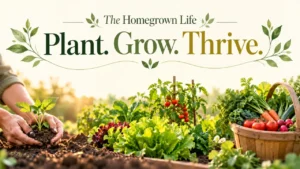
If this idea of learning, experimenting, and growing more confident season by season resonates with you, we’d love to have you join us for our free live gathering,
The Homegrown Life: Plant. Grow. Thrive.
We’ll explore practical growing skills, visit real vegetable gardens, hear from fellow gardeners, and make space for your questions along the way.
Tuesday, October 20, 2026
2 PM Pacific / 5 PM Eastern