
Many home gardeners think of strawberries as a spring project. As soon as the weather warms up, they head to the garden center, bring home a few plants, and hope for a good harvest.
But what if one of the biggest keys to sweeter, healthier strawberries actually happens months before spring? During a recent Thriving Gardener Masterclass, farmer and educator Michael Kilpatrick shared why fall planting has become the foundation of his strawberry-growing system—and why it can make such a difference for home gardeners.
If you’ve ever wondered how to grow strawberries for an earlier harvest, you’ll find plenty of practical ideas in this training.
One of the biggest takeaways is surprisingly simple: if you want an earlier, more abundant harvest, spring may not be the best time to start.
The masterclass goes much deeper into the real-world timing, variety selection, and seasonal decisions that help this system succeed in different climates.
>> Get access to the full Strawberry Success Masterclass here
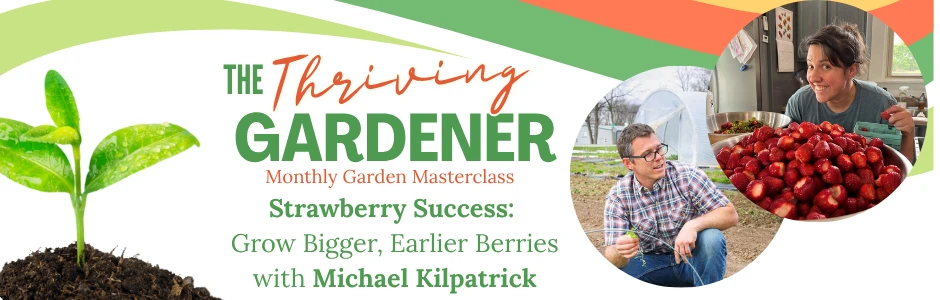
Why do some gardeners harvest strawberries weeks earlier than everyone else?
When should you plant strawberries for an earlier spring harvest? Michael recommends giving fall-planted plugs about six to eight weeks of active growth before the first hard freeze.
During that time, the plants develop strong crowns and healthy root systems. Then, when spring arrives, they’re ready to grow quickly and produce fruit much earlier than spring-planted strawberries.
For home gardeners, that shift in timing can have a meaningful effect on the following year’s harvest.
Why Plant Strawberries in the Fall?
Perhaps the most surprising concept Michael shared is what he calls the annual bed system.
Rather than dedicating garden space to strawberries year after year, he treats them as part of an ongoing crop rotation. Summer vegetables come out in late summer, strawberries go in for the fall and winter, produce heavily the following spring, and then that space becomes available for another crop.
For home gardeners with limited space, that’s an exciting way to think about strawberries.
Instead of maintaining older beds that can gradually produce smaller berries and experience more disease pressure, the annual system starts each season with healthy new plants and gives gardeners the opportunity to rotate crops through the space. Michael explained that this approach has consistently given his farm earlier harvests, larger berries, cleaner fruit, and fewer disease problems.
How do you choose the right strawberry varieties?
One of the benefits of growing strawberries at home is that you can choose varieties based on what matters most to you. Michael contrasted that with store-bought berries, which may be picked before full ripeness because they have a long distance to travel.
(From Michael Kilpatrick’s “Strawberry Success” Thriving Gardener Masterclass)
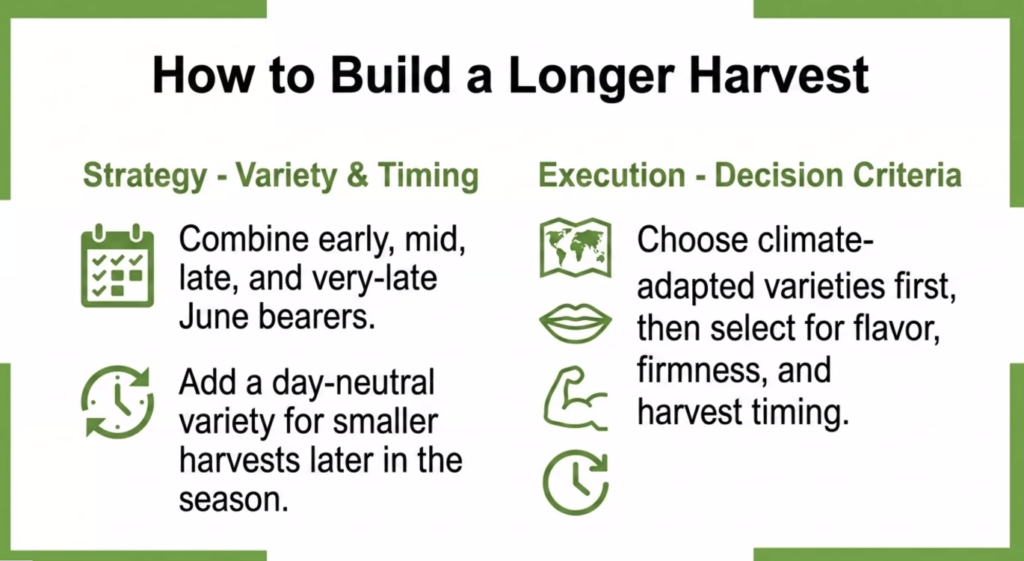
Michael encourages gardeners to think about more than just berry size. Different varieties offer different strengths, including:
🍓Earlier or later harvests
🍓Richer flavor
🍓Larger fruit
🍓Better performance in your local climate
He also explained how combining early, mid-season, late, and even day-neutral varieties can extend your harvest for weeks instead of producing one short flush of berries.
Small details can make a surprisingly big difference
The presentation also highlighted several practical decisions that many gardeners overlook.
Strawberries thrive in full sun, well-drained soil, and consistent moisture—not soggy conditions. Michael recommends preparing beds with compost before planting, spacing plants appropriately, and making sure the crown sits right at soil level instead of being buried.
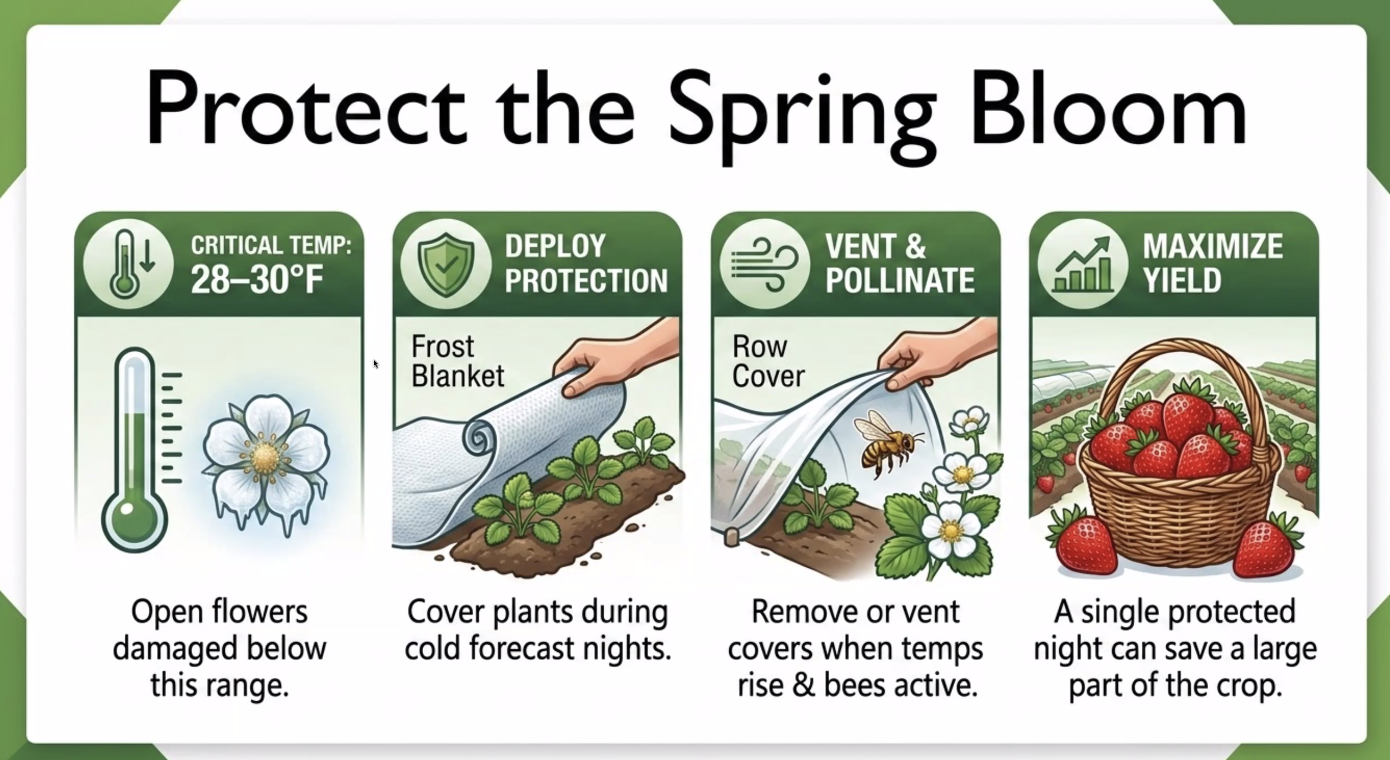
He also discussed protecting blossoms from late spring frosts. Even when temperatures don’t seem dangerously cold, open blossoms can still be damaged. Keeping row covers ready for those chilly nights can protect much of your future harvest.
(From Michael Kilpatrick’s “Strawberry Success” Thriving Gardener Masterclass)
These aren’t difficult techniques, but together they can make a noticeable difference in the quality and quantity of berries you harvest.
Should you replace strawberry plants every year?
Many gardeners wonder whether they should keep the same strawberry patch growing for years or start fresh.
Michael explained that while strawberries can continue producing for multiple seasons, older plantings often accumulate diseases, produce smaller berries, and occupy valuable garden space. His annual system replaces plants each year with healthy, disease-free stock to keep production high and reduce disease pressure.
Whether you decide to follow an annual system or keep your patch longer, understanding the advantages and tradeoffs can help you make the best decision for your own garden.
And of course, one of the greatest rewards is walking into the garden and picking a perfectly ripe strawberry that’s bursting with flavor—something that’s hard to match from a store-bought berry. Michael also pointed out how much fun strawberries can be for children and grandchildren, sharing a story about his own young daughter’s excitement when she realized she could eat a berry straight from the patch.
How to Grow a Better Strawberry Harvest Next Spring
Growing great strawberries isn’t about finding one secret trick. It’s about making a series of good decisions before the growing season even begins.
Choosing varieties that fit your climate, planting at the right time, preparing healthy soil, protecting blossoms, and thinking strategically about your garden space all work together to produce healthier plants and a more abundant harvest.
This article shares just a few of the practical ideas Michael covered. In the full Strawberry Success masterclass, he demonstrates the complete annual bed system, explains regional planting timelines, compares strawberry varieties, and answers common questions from home gardeners.
🍓🍓🍓🍓🍓🍓🍓
If you’re planning to grow strawberries this year (or simply want a bigger, earlier harvest next spring) watch the full Strawberry Success masterclass, to learn the complete system Michael uses to grow healthier plants and more productive strawberry beds.