
If you have ever stood in front of a pile of ripe tomatoes without an exact recipe, you are in good company. Some family recipes are not built from precise measurements. They are learned through tasting, repetition, and years of watching someone cook.
That is part of the story behind Stacey Murphy’s much-requested pasta sauce. It began with her Italian grandmother’s Sunday “gravy,” continued through her father’s attempt to write down a recipe that had always been made by feel, and eventually inspired Stacey’s own vegetable-filled version.
Stacey often used soft, end-of-season tomatoes from the farmers market. They may not have looked perfect, but she considered them ideal for cooking into sauce.
Stacey’s sauce stood out because she built flavor gradually with soft tomatoes, caramelized vegetables, fresh herbs, finely chopped cauliflower, and Parmesan rind.
You’ll find several of her main ideas below, but the video is where Stacey shares the family story and works through the approximate ingredients from memory.
The video is where Stacey reveals the imperfect, lived-in process behind a sauce that was never fully captured as a written recipe.
A Family Recipe Made by Feel
Stacey’s grandmother owned a restaurant in Detroit and was known in the family for her pasta and pasta sauce. Every Sunday was what Stacey called “grandma’s gravy day,” when the family gathered for pasta.
Her grandmother did not follow a written recipe. She explained that she made the sauce according to the flavor and the day, even though Stacey remembers it tasting the same each time.
When her grandmother was around 85, Stacey’s father realized that no one had written down her recipes. He came over one Sunday and tried to measure each ingredient as she added it.
Even then, he could not capture everything. At one point, he noticed her adding something out of the corner of his eye and asked what it was. She responded, “What was what?” He recorded most of the recipe, but some of its mystery remained.
How Stacey Made the Sauce Her Own
Stacey’s version was influenced by her grandmother’s sauce, but she described taking it in a more farmers market direction.
At the time, Stacey was vegetarian. As she considered her grandmother’s sauce and its flavor balance, she chose vegetables and herbs from the farmers market.
Her main ingredients included:
• Tomatoes
• Onions
• Red peppers
• Carrots
• Fennel
• Garlic
• Fresh oregano
• Fresh parsley
• Fresh basil
Stacey was clear that she was recalling the sauce from memory. It had been about seven years since she had made it, and she no longer remembered every measurement.
For a very large pot, she recalled using approximately two onions, two red peppers, one good-sized fennel bulb, about six medium carrots, and a whole head of garlic.
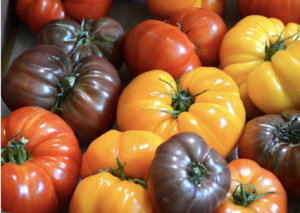
Can you use soft tomatoes for pasta sauce? Stacey did. She often bought bags of soft, end-of-season tomatoes at the farmers market and described them as perfect for sauce.
For home gardeners, this is a practical way to use ripe tomatoes, peppers, carrots, fennel, garlic, and herbs in one seasonal meal.
A softer tomato may still have a place in a cooked sauce, even when it is no longer ideal for slicing.
Why Stacey Cooked the Vegetables Before Adding the Tomatoes
One family practice Stacey continued was seasoning the pot first.
She began with olive oil, chopped garlic, oregano, and parsley. She did not add the basil at that stage because she preferred to keep it as fresh as possible.
Stacey cooked the garlic until it was caramelized rather than burned. She then added the onions and allowed them to caramelize.
The other vegetables went in according to how much cooking time they needed. Carrots and fennel were added earlier, followed by the red peppers. Stacey sometimes shaved the carrots with a peeler so they would dissolve into the sauce more easily.
Once the vegetables were very soft, she added the tomatoes, covered the pot, and allowed the moisture to cook away.
The main idea was simple: she gave the vegetables time to cook before the sauce came together.
Stacey’s Two Unexpected Additions
For her vegetarian bolognese-style sauce, Stacey finely chopped purple cauliflower until the pieces looked similar to small pieces of meat.
She added the cauliflower after the tomatoes had cooked down and let it cook in the sauce. Stacey said people found the sauce delicious but did not understand what it was. When they discovered it was not meat, she said she was disqualified from the bolognese competition.
Her second secret was a Parmesan rind. Stacey added a large rind, and sometimes several, while the sauce cooked. She said the salty Parmesan flavor moved into the sauce while the rind itself became rubbery and tasteless. She removed and discarded it at the end.
Both additions came from Stacey’s way of experimenting with flavor and texture rather than following one fixed formula.
Is Stacey’s Pasta Sauce Safe for Home Canning?
Stacey’s exact pasta sauce recipe is not a tested home-canning recipe.
She explained that the sauce contained ingredients such as red peppers, carrots, fennel, and sometimes cauliflower. The Parmesan rind added dairy, which she identified as another concern for canning.
Can you safely can this exact sauce based on Stacey’s description? No. Stacey specifically said that anyone canning food should follow an approved recipe.
Her recalled sauce can still offer inspiration for a version you plan to eat fresh rather than treat as a tested shelf-stable recipe.
Stacey’s story is a reminder that garden cooking does not always begin with a perfectly measured formula. Sometimes it begins with ripe produce, a family tradition, and the willingness to pay attention as the food changes in the pot.
Your version may not taste exactly like Stacey’s. It may slowly become something your own family remembers and asks you to make again.
Want to Learn More About Preserving Your Harvest?






My tomatoes are just ripening and I’m picking them early to ripen on the counter. I’ve recently read it is better. I also rad that when making tomato sauce on should toss in some tomato leaves and stems. I haven’t tried it yet but there was so scientific explanation as to why it’s a good practice.
Thanks!