Container gardens can change quickly in summer. One pot may dry out faster than another, even when both are watered at the same time. This does not mean you are doing anything wrong. Different containers, plants, temperatures, and amounts of sunlight can create very different watering needs.
The most reliable way to keep container plants watered is not simply to add water more often. It is to help the potting mix absorb moisture evenly and use a system that releases water gradually as the soil begins to dry.
This video explores several ways to do this, from a simple bottle placed in the soil to sub-irrigated planters that hold a supply of water beneath the potting mix. The ideas here offer a useful place to begin, but the full training shows the lived details, small mistakes, and practical tradeoffs that can determine whether a self-watering system truly supports your garden.
How Do Self-Watering Containers Work?
A self-watering container does not mean the plant creates its own water or that the gardener never needs to pay attention. You still fill a bottle or reservoir and observe how the system is working.
The difference is that water can be released gradually instead of being added only through frequent hand-watering.
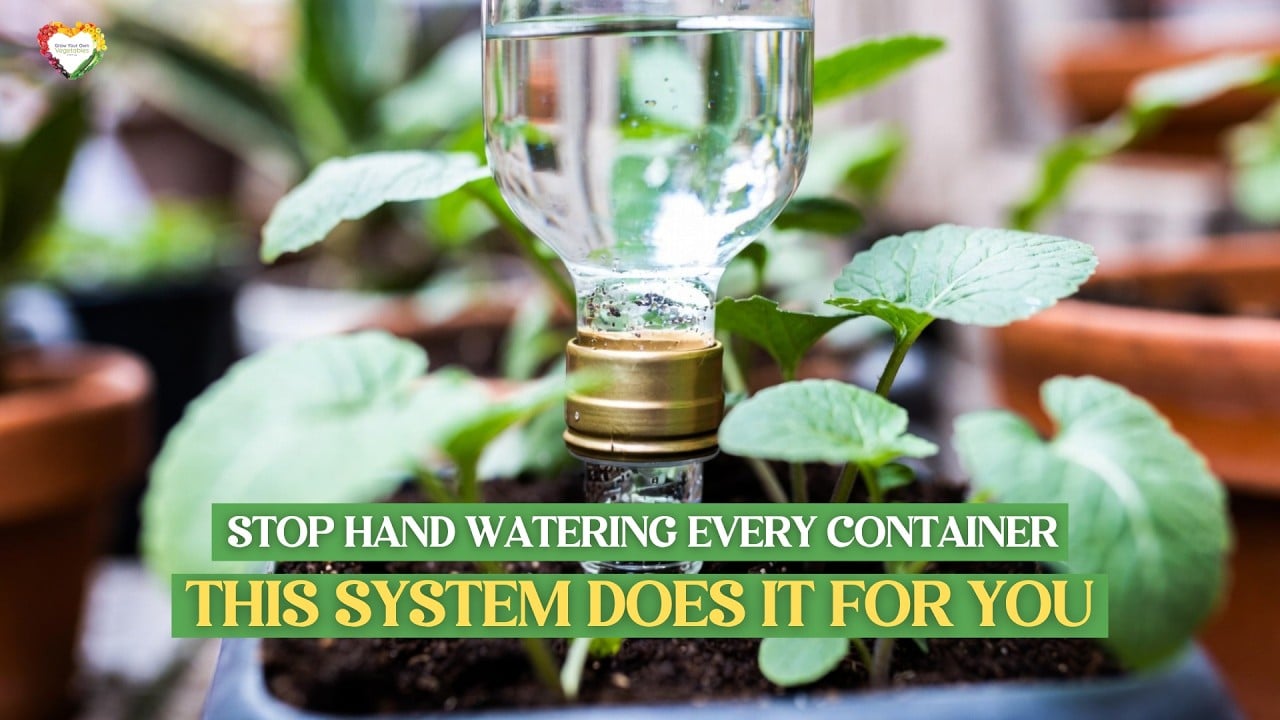
One of the simplest approaches uses a bottle filled with water and placed upside down in the potting mix. When the surrounding soil is moist enough, pressure stops more water from flowing out. As the soil begins to dry, the pressure changes and additional water begins to seep into the container.
This allows the potting mix to receive more water as it dries instead of releasing the entire bottle at once.
Rather than hand-watering every pot repeatedly, you create a small water supply that responds to changes in the moisture of the potting mix.
What Helps Container Soil Stay Moist More Evenly?
Three simple conditions help water move through a container more effectively:
• The potting mix is evenly moistened before planting.
• Water is released gradually through a bottle or reservoir.
• Water soaks into the center of the pot instead of running down gaps around the sides.
These conditions matter because even a well-designed watering system cannot support the plant if the potting mix is too dry to absorb the water.
Why Does Water Run Down the Sides of Container Soil?
Sometimes you water a container and see water rush out of the drainage holes almost immediately. It may appear that the pot has received plenty of water, yet much of the potting mix can remain dry.
This can happen when potting mix becomes hydrophobic, meaning it has dried enough that it repels water instead of readily absorbing it. The soil may also pull away from the sides of the pot, creating a gap where water can run straight to the bottom without soaking into the center.
That is why one of the most important steps happens before you plant: mix water into the potting mix until it feels evenly moist.
You are not trying to saturate it. The mix should be moist without releasing water when you squeeze it. Premoistening helps the potting mix accept water so a bottle or reservoir system can work as intended.
As the season continues, you can watch for a few signs mentioned in the training:
• Water runs down a gap around the sides of the container.
• The surface of the potting mix becomes crunchy.
• A full bottle empties immediately instead of gradually balancing out.
These are not signs that you have failed. They are useful clues that the water may not be soaking into the potting mix as intended.
Do Wine Bottle Watering Systems Really Work?
A bottle watering system can work when the potting mix is already moist enough to accept water.
The bottle is filled, turned upside down, and placed into the soil. If the system is working properly, the water level eventually stops dropping as the pressure balances. As the potting mix dries, more water can seep out.
If the bottle empties immediately, the water may be escaping through dry soil or gaps in the container instead of moving gradually into the mix.
This is why the bottle itself is only part of the system. The condition of the potting mix determines whether the water can be distributed effectively.
How Can You Keep Containers From Drying Out So Quickly?
There is more than one way to create a steadier water supply for container plants. The approach you explore may depend on the containers you use and how often you are available to water them.
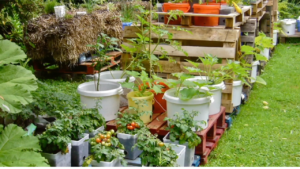
A bottle system can be used in an individual pot. A sub-irrigated planter takes the idea further by storing water in a reservoir beneath the soil. In the training, this type of system allowed volunteers at a community garden project to fill the reservoir about once a week while the plants accessed water between visits.
This may be especially helpful when you travel, work long hours, garden on a balcony, or cannot be present to hand-water every container throughout the day.
Vertical pallet gardens present a different challenge. Because every level holds its own potting mix and plants, each section needs to be watered. Tipping the pallet slightly or using a watering can with a long, narrow spout to make it easier to reach the soil rather than pouring water over the plants.
The goal is not to build the most elaborate system. It is to consider whether the container makes it easy for water to reach and soak into the potting mix.
You might begin with one bottle in one container. Premoisten the mix, place the filled bottle upside down in the soil, and observe whether the water level stops dropping once the pressure balances. This gives you a simple way to see how the system behaves before trying it throughout your garden.
Do Self-Watering Planters Still Need More Water in Hot Weather?
Yes. A self-watering system can make moisture more consistent, but plants may still use more water as temperatures rise.
Stacey describes using about one gallon of water per day for her container area when temperatures were below 85 degrees and about two gallons when temperatures rose above 85. She watered in the early morning or, when that was not possible, after the sun went down.
This is an important part of working with your garden rather than following a rigid rule. The system supports the plant, but you still notice how the soil, temperature, and plants are responding.
A self-watering approach does not mean you stop paying attention. It gives you another way to help water reach the potting mix gradually while reducing the need to react only after plants begin to wilt.
You do not need to try every type of container at once. Start with a simple system, watch how the water moves, and make adjustments based on what you observe. Each container can teach you something about how moisture behaves in your particular garden.
Watch the full training to see Stacey explain the different self-watering approaches, the potting mix mistake that can keep water from soaking in, and the practical considerations she encountered in her own container garden.
Do your containers tend to dry out too quickly, stay too wet, or both?
(Please share in the comments below)
Watch The Full Q&A Clip Here:
Keep Learning With Us on YouTube
Want to see more real-life garden examples, practical growing tips, and seasonal advice from Grow Your Own Vegetables?
Visit our YouTube channel for more videos to help you understand what your garden is showing you, grow with more confidence, and keep learning season by season.