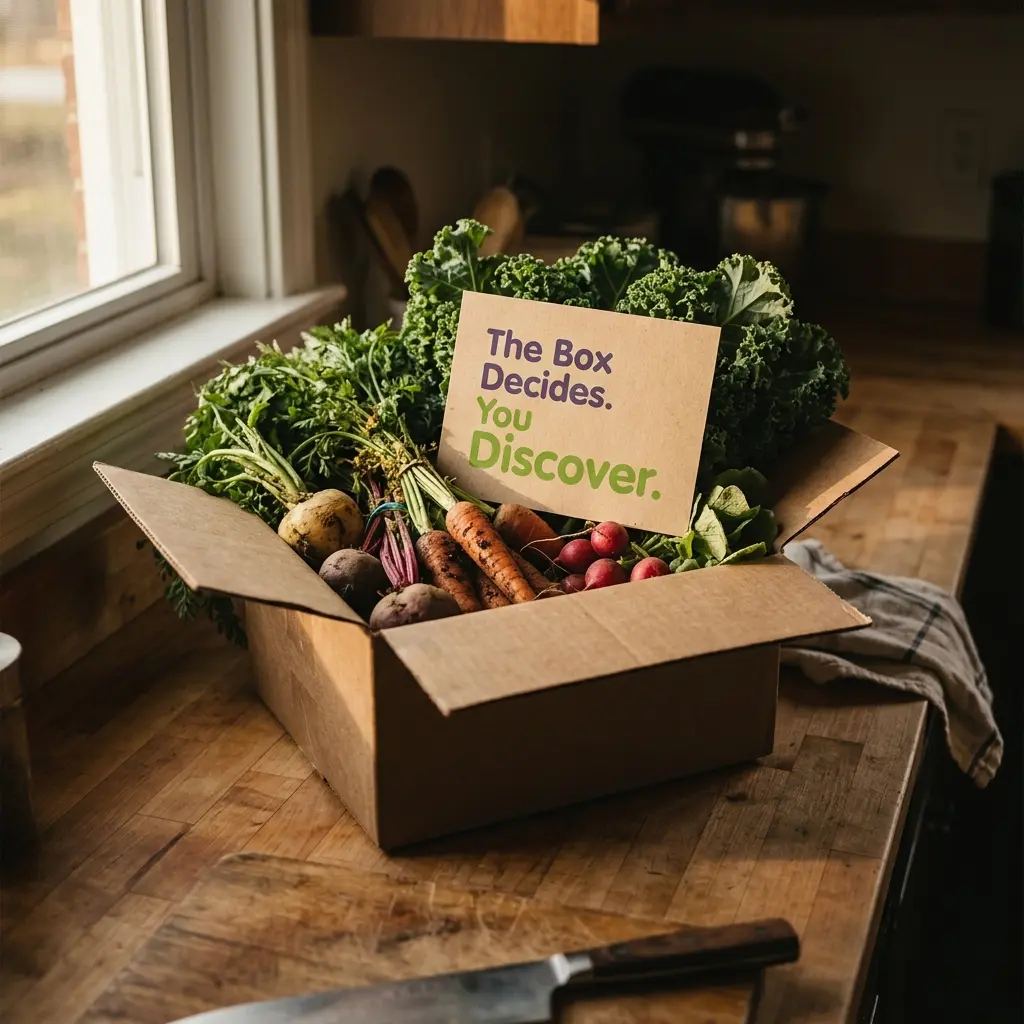
A CSA box — short for Community Supported Agriculture — is one of the most underrated tools available to a home gardener. It fills gaps in your harvest, introduces you to vegetables you might never have grown or picked up at the farmers market, and pushes you to get creative in the kitchen in ways you simply wouldn’t if you were choosing your own produce every week. And because the box arrives whether you planned for it or not, it has a way of making you more intentional: you find yourself looking up new recipes, trying different preparations, and making sure nothing goes to waste. It works with your garden, not instead of it.
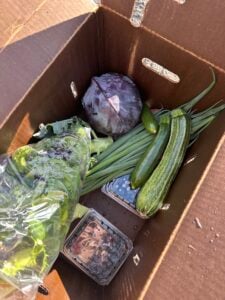
Every week when you open a CSA box, it feels a little like getting a surprise package from the season. Some of what’s inside will be familiar (vegetables you already grow and love). Some of it will quietly fill the gaps in your own garden. And every now and then, something unexpected shows up that nudges you toward a new recipe, a new cooking technique, or a question worth asking: Would I want to grow this myself next year?
A CSA box does not just feed you. It connects you to what is actually ready right now, in your region, grown on local land. That is something a well-stocked grocery shelf cannot replicate.
Getting Vegetables You’d Never Have Chosen for Yourself… and Learning to Love Them
Here is one of the most underrated benefits of a CSA: it puts vegetables in your kitchen that you would never have reached for at the store or the farmers market, and then quietly challenges you to figure out what to do with them.
That constraint is actually a gift. When you choose your own produce, you naturally gravitate toward what you already know how to cook. A CSA breaks that habit. It hands you something unfamiliar and essentially says: here, figure this out. And more often than not, you do, and you end up with a new recipe, a new favorite preparation, or at least a much better sense of whether something is worth growing yourself.
Turnips are a great example. Left to your usual grocery habits, you might walk right past them. But when they show up in your box, you have a reason to try them, and more importantly, to try them more than once, in more than one way. Roasted. Added to a soup. Mixed into a hash. You start to learn whether you actually enjoy them.
Before you commit an entire raised bed to a vegetable you have never cooked, it helps to know whether you like eating it. A CSA gives you that hands-on testing ground without any long-term commitment. You get to taste first, then decide.
This kind of firsthand discovery can shape an entire season’s planting plan. A new variety of kale, an unfamiliar root vegetable, a particularly flavorful tomato… any one of them might earn a spot in your garden next year, not because a seed catalog made it look appealing, but because you actually tasted it and decided it was worth growing.
Abundance Is an Invitation to Get Creative
Kale has been showing up in the box the last few weeks. Which raises the same question gardeners know well: What else can I do with this?
This is not a complaint. It is a practice. Moving from “I don’t know what to do with this” to “I’m going to find out” is one of the most useful mindset shifts you can make as both a gardener and a CSA member. That shift is what turns a weekly box into a genuine cooking education.
There is also something else at play: when you know the produce is coming regardless, you become more intentional about using it well. You do not want to let it go to waste. So you look up a new recipe. You try roasting something you would normally steam. You blend the extra greens into a sauce instead of watching them wilt. You look for ways you can preserve it to use in the off-season. That intentionality builds real kitchen skill over time, and it carries directly into how you cook from your own garden.
Whether the abundance comes from your own garden or your CSA box, the question is not always “What should I buy?” Sometimes it is, “What creative thing can I make with what is already here?”
And if you want to go even deeper on making the most of what comes through your door week after week, this is exactly what our Preserve the Harvest masterclass was built for. The focus is on small-batch preserving, no waiting until you have a full bushel of something. Just practical, approachable techniques you can use with what you have right now, whether it came from your garden or your CSA box.
A few practical ways to handle seasonal abundance well:
• Freeze or blanch what you cannot use this week
• Ferment or pickle for later in the season
• Bring a dish to a gathering (the broccoli salad approach
• Share with a neighbor or local food pantry
• Blend surplus into soups and sauces you can store
A CSA Does Not Replace a Garden. It Complements One.
Here is something worth saying plainly: a CSA is worth it even if you already have a garden, in fact, especially if you do. Growing some of your own food does not mean you have to grow all of it.
A CSA is one of the most enjoyable ways to expand what is on your plate, learn from local farmers, and gather real inspiration for what you may want to grow next season. Here is how it works alongside your garden in practice:
It fills in the gaps and adds variety.
A CSA provides crops you do not grow, foods that are not ready in your garden yet, or extra produce during a lighter harvest week. It also adds variety without requiring you to plant and manage every crop yourself — even a productive garden can leave you eating the same vegetables on repeat.
It shows you what grows well locally.
The box gives you a real-time look at what is thriving in your region right now. That is genuinely useful information when you are planning your own planting decisions for next season.
It helps you discover what you may want to grow next year.
A new kale variety, an unusual root vegetable, a fresh herb, or a particularly flavorful tomato… any of these could earn a spot in your garden based on real experience, not just a photo in a seed catalog.
It builds your confidence in the kitchen.
A CSA gently pushes you to try new recipes, cook with unfamiliar ingredients, and get more comfortable preparing seasonal food. That confidence carries directly into cooking from your own garden, which is one of the most rewarding parts of growing your own vegetables.
It teaches you how to handle abundance.
Whether that means making a dish for a barbecue, sharing with neighbors, freezing extra, or blending surplus into soup, learning to work with abundance is one of the most practical skills a gardener can develop. A CSA gives you regular practice.
It supports local farmers and a stronger food system.
Your membership helps farmers plan ahead, grow with more stability, and continue feeding people in your community. That matters far beyond your own kitchen.
Keep a “Would I Grow This?” List
Here is a simple practice worth starting if you garden and belong to a CSA: keep a running note in your phone, your garden journal, or your seed-planning notebook about everything that comes in your box. This is one of the best ways to decide what to grow next year, because it is based on what you actually enjoyed eating, not just what looked good in a catalog.
For each item, jot down one of the following:
• Loved it
• Would buy again
• Want to grow it next year
• Need a better recipe for it
• Not for me
By the time seed-starting season comes around, you will have a much clearer picture of what you actually want to grow, not just what looked interesting in a catalog, but what you genuinely enjoyed eating. That is a more useful guide than any seed company marketing copy.
How to Find a CSA Near You
If you are interested in trying one, start simple: search for “CSA near me” or “community supported agriculture near me.” You can also check your local farmers market, food co-op, cooperative extension office, or community gardening groups. Most CSAs fill up quickly, especially in the spring, so if you find one you like, it is worth reaching out early.
Before you sign up, a few questions worth asking:
• What months does the share run?
• How often do you pick up a box?
• Is it a full share, half share, or customizable?
• Where is the pickup location?
• Do they include recipe ideas or storage tips with each box?
• Can you pause, swap, or share a box if you are away?
The answers will tell you a lot about whether a particular farm is a good fit for your household size, schedule, and cooking habits.
Frequently Asked Questions About CSA Boxes and Home Gardening
Is a CSA box worth it if I already have a garden?
Yes, especially if you do. A CSA fills gaps your garden cannot cover every week, introduces variety beyond what you plant, and gives you a low-risk way to taste new vegetables before committing garden space to them.
How do I use CSA vegetables before they go bad?
The most effective strategies are: cook or blanch and freeze anything you cannot use within a few days, batch-cook into soups or sauces you can store, ferment or pickle heartier vegetables like greens and root vegetables, and plan at least one new recipe per week using the box contents before the next delivery arrives. If you want a step-by-step system for this, our Preserve the Harvest masterclass covers small-batch preserving techniques specifically designed for home gardeners and CSA members working with weekly quantities, not bushels.
What vegetables are hardest to get through in a CSA?
Leafy greens like kale and chard tend to accumulate quickly because they arrive in large bunches and wilt faster than root vegetables. The solution is to treat them as the base of a meal rather than a side, adding them to smoothies, blending into sauces, or sautéing as a base for eggs, pasta, or grain bowls.
A Garden Lifestyle, Not an All-or-Nothing Goal
A garden and a CSA box can work beautifully together. One helps you grow more of your own food. The other brings fresh ideas, seasonal variety, and a deeper connection to the farmers and foods in your local area.
Neither one requires you to be perfect. Neither one demands that you grow everything or have it all figured out. The goal is not self-sufficiency for its own sake. It is building a food life that is joyful, practical, and sustainable for how you actually live.
Each box is a small reminder to stay curious: try something new, make something from what is already here, and pay attention to what you may want to grow next season. That curiosity is what makes gardening worth it, season after season.
Have you ever belonged to a CSA, or is there a local vegetable you tried that made you want to add it to your own garden? Share it in the comments below.
Have Extra Produce? Make It Last.
Whether your abundance comes from a CSA box, the farmers market, or your own garden, a few simple preservation strategies can help you waste less and enjoy fresh food longer.

Join Stacey Murphy’s complimentary masterclass, 3 Strategies to Simplify Preserving & Storing the Harvest, and discover:
• Simple ways to save fresh produce for later
• How to create easy meals from basic garden ingredients
• A practical way to stock your kitchen in just a couple of hours
You’ll also receive a complimentary Quick Guide for Preserving the Harvest.